

Several cities, multiple roles.
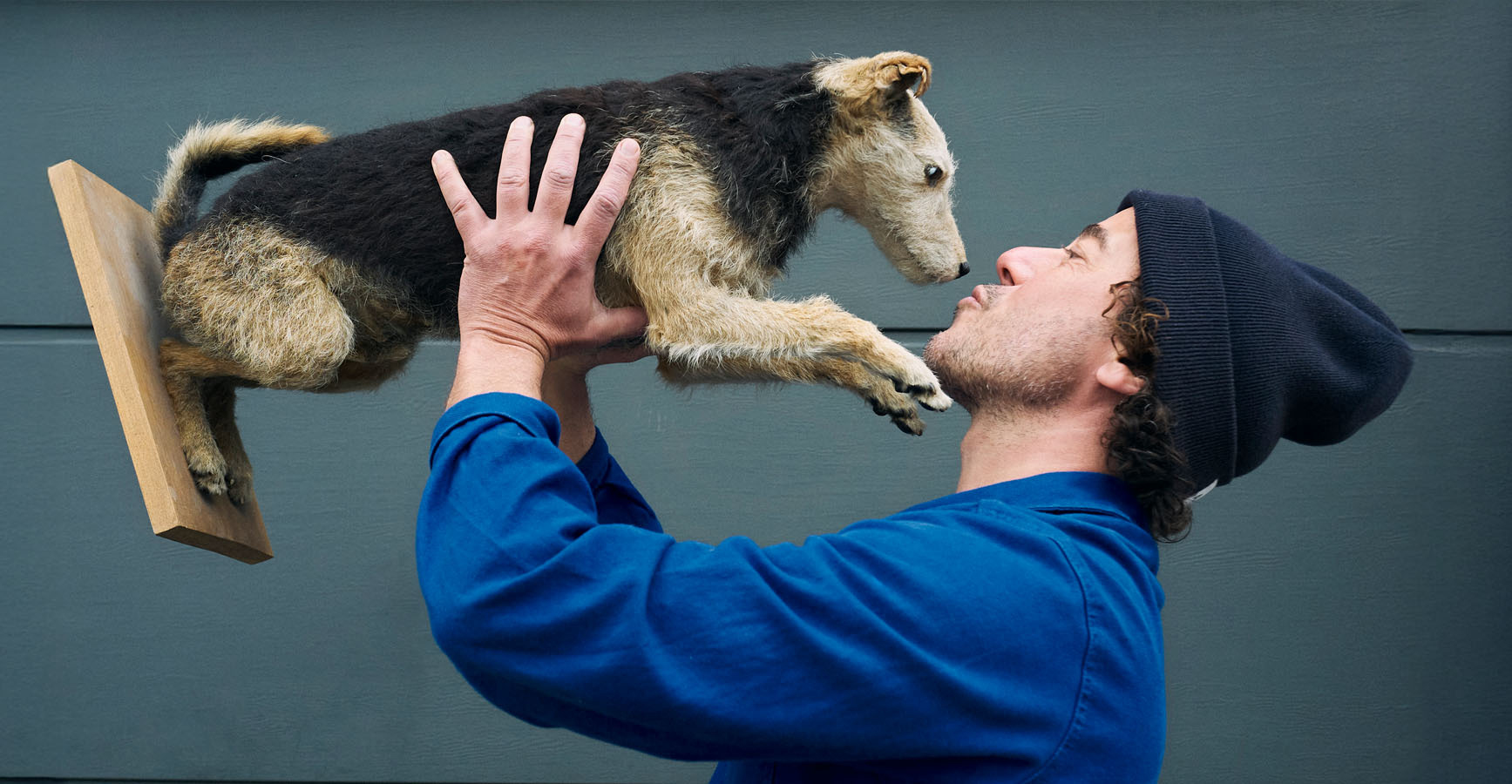
As a French creative who left Paris in 2005, went on to become an award-winning creative director in London and Amsterdam, a director at Iconoclast, and now founder of Albert Albert in Amsterdam, Thierry Albert has witnessed the advertising industry evolve from the inside. For LLLLITL, this outspoken advocate for creative freedom reflects candidly on his journey, from navigating the clashes between major advertising cultures to confronting the heavy machinery of global networks and explains why the future of the industry belongs to independents and freelancers.
From French radio to the golden age of Wieden+Kennedy Amsterdam
Matthieu Lamoureux: Your LinkedIn profile shows you started as a Copywriter. How do you make the leap from Copywriter to Creative Director and eventually to Director?
Thierry Albert: “Quite naturally, actually. I come from a copywriting background. I was even named ‘Best Radio Writer’ in France early on. That’s really how it all started. I went to see Dominique Chevallier, who was a big name at Publicis Conseil at the time, and told him: ‘I’ll do all your radio ads.’ He loved the idea.
We ended up creating some pretty wild stuff for Levi’s, including the ‘Ouch-Ouch’, a bird with oversized balls shouting ‘Ouch! Ouch!’ every time it landed, needing extra-large Levi’s jeans… It picked up a lot of awards. I also worked on radio spots for Disney releases like Toy Story 2, Home on the Range, and Finding Nemo…
Radio, like a print ad, forces you to be direct, simple, and driven by a strong idea. At the end of the day, this job is still about one thing: the idea, always.
“Radio ads, just like print ads, force you to be direct, simple, and driven by a strong idea.”
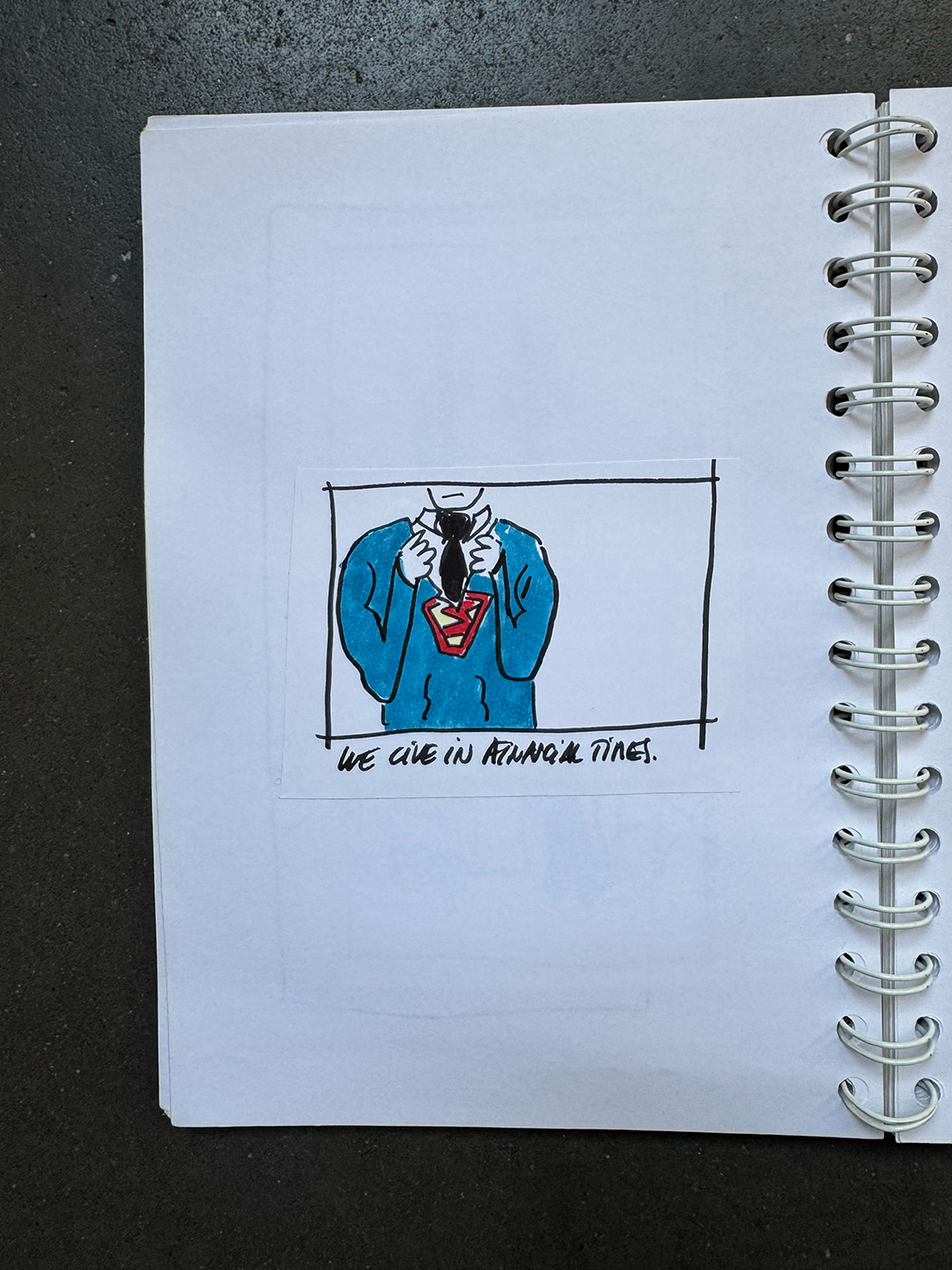
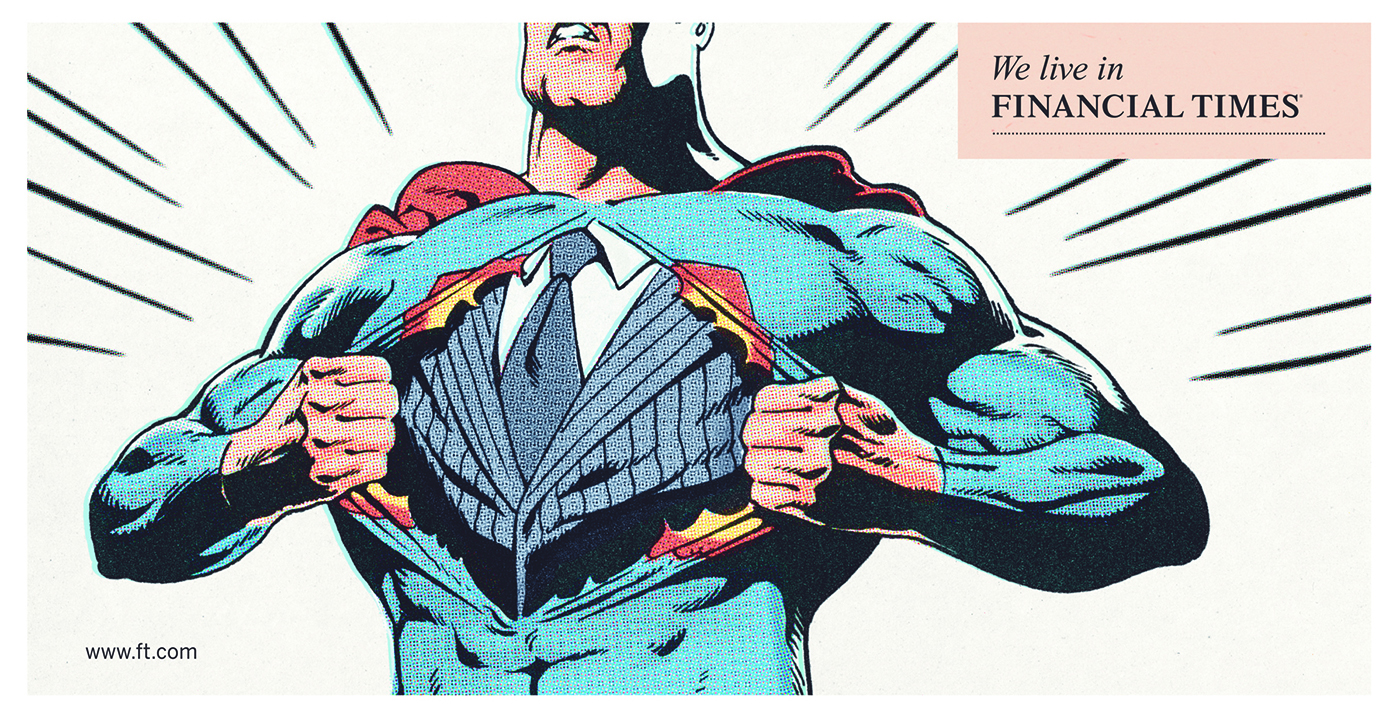
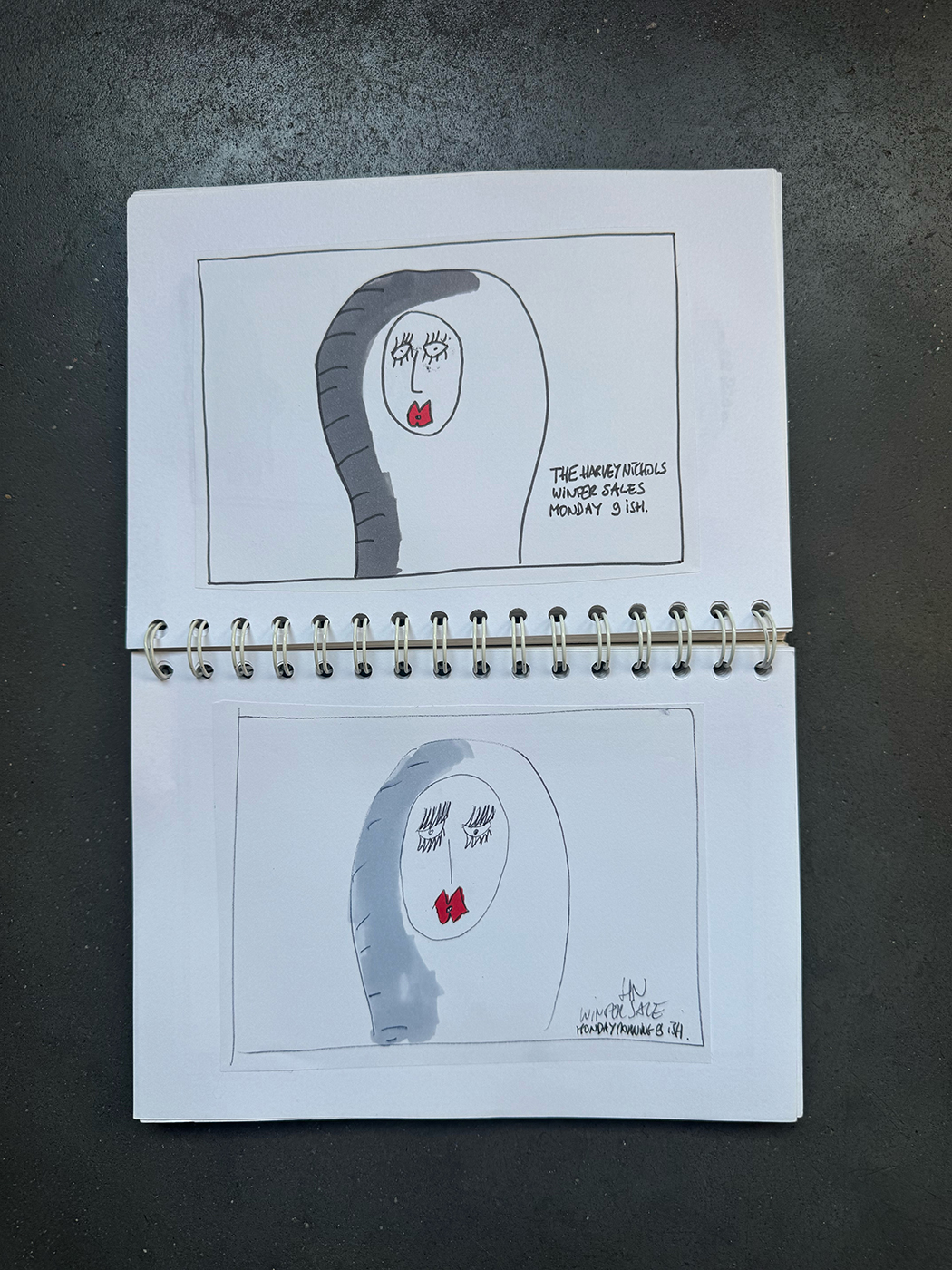
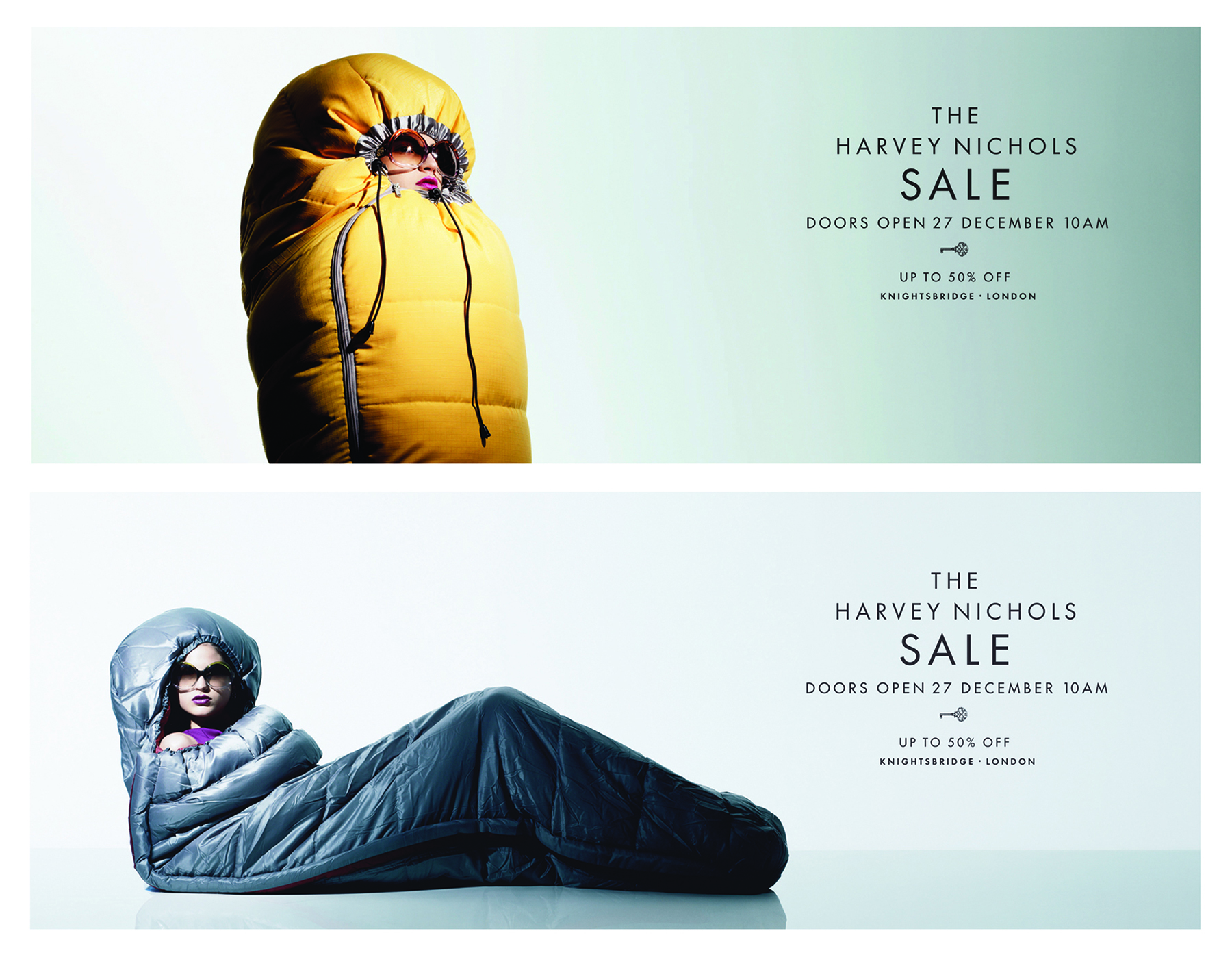
Then comes the next step: turning the idea into reality. I spent years doing that alongside Damien Bellon, a brilliant Art Director who draws like a god. I’d hand him simple Post-its with basic sketches, and he’d transform them into visual masterpieces, exploring dozens of compositions, angles, and executions.
 |
 |
 |
 |
It was the same when I moved into TV, working with some of the best Directors in advertising, like Tom Kuntz or Dougal Wilson. You learn how to actually make a film, how to tell a story, what to keep, what to lose, how to shape the edit, craft the sound… A lot of great Directors, like Frank Budgen or Chris Palmer, started out as Copywriters. At some point, they just wanted to take their ideas further, after years of creating them for others.”
Matthieu: Before settling in Amsterdam, you built a rich career, especially in London, moving between major networks and independent agencies. What did that journey look like?
Thierry: “I started at Publicis Groupe but I’ve always been obsessed with bold, slightly unhinged creativity, so I quickly gravitated toward more independent, human-scale agencies, places that protect ideas and craft them in a more artisanal way.
In Paris, I worked at BDDP & Fils, then moved to London to join DDB and Mother, and later Wieden+Kennedy in Amsterdam. Agencies like Mother or Wieden+Kennedy, full of passionate people, will do everything to help you bring an idea to life. It’s a world away from mega-networks with thousands of employees, where many layers of hierarchy stand between you and the final work.
And alongside that, I was always directing. I made a documentary for Dazed about my Cape Verdean kitesurfer friends who are true pioneers (watch it below), followed the wild French death metal band Omaha Bitch on tour in Russia, and shot music promos for The Pet Shop Boys, or for The Kooks which was recognized at D&AD (watch it below). The more freedom I had, the happier I was.”
Matthieu: You then made the move to Amsterdam, joining Wieden+Kennedy for a fantastic run. How did that come about?
Thierry: “I brought Faustin Claverie over to London when Damien moved back to Paris. We worked together at Mother, then briefly at VCCP, for about nine months, where we made a killer film for McLaren that caught the attention of Mark Bernath and Eric Quennoy, Executive Creative Directors at Wieden+Kennedy Amsterdam. They called us to lead the Heineken business.
We hesitated at first, we were directing more and more music videos under the fairly awesome name Surrender Monkeys. Our music video for Duke Dumont, “The Giver”, was taking off, and today it has reached 56 million views on YouTube. But the opportunity was too big to ignore. Launching bold, global campaigns, something no French creative had really done before.
Back then, the agency was packed with wild, brilliant people. It was chaos, in the best way. Mark and Eric gave us total freedom, and we had an amazing time. At first, I hated the idea of leaving London, I loved it too much, I knew everyone. For two years, I was basically commuting: Amsterdam during the week for W+K and Heineken, then back to London every weekend to shoot music videos like “Chunky” for Format:B.
“It was chaos, in the best way.”
But yes, we did some incredible things for Heineken at W+K, creating the first advertising ‘hero’ played by 20 different guys, shooting with Daniel Craig, sending posters on an adventure around the world or using Elvis Presley, ‘The King’, as a soundtrack. It really was a golden era.”
Matthieu: What convinced you to settle in Amsterdam?
Thierry: “When my son arrived, a decision had to be made. And honestly, when you have kids, Amsterdam is the best city in the world. The bike changes everything, you can get anywhere. To the agency, of course, but also to your Heineken client in ten minutes flat. At 5:55pm, you leave work to pick up your kid and you’re there by 6.
“When you have kids, Amsterdam is the best city in the world.”
In London, if you have a presentation at Coca-Cola in Hammersmith (West London) for example, your whole day is gone. You don’t know when you’ll be back. Today, I still get offers from elsewhere, even the US, but the quality of life here is unbeatable.”
Matthieu: Compared to Paris, where you grew up and had your jobs in the industry, how do you perceive the difference in work culture?
Thierry: “I love Paris, it’s my hometown, but it’s become a bit of a beehive. The density is so high, on par with cities like Jakarta, that it creates a lot of tension. And then there’s the hierarchy. In France, it’s very vertical: when the boss walks in, everyone goes quiet. Bosses have the final say, even when they’re wrong.
In the Netherlands or in England, it’s much more horizontal. People listen, respect each other and collaborate. Hierarchy works when the boss is brilliant, but when there’s more ego than talent, it becomes unbearable.
For me, a good boss is someone who listens, who doesn’t need to be right all the time, and who trusts you. At W+K, when I wanted to direct Uber Eats campaigns for the World Cup, or needed time to direct the very first Paris 2024 film with Buzzman, Mark and Eric were always supportive and encouraging. No ego, just talent.”
Network, backstage, and blue jacket
Matthieu: It’s often said that the Parisian scene is quite closed. Is that something you feel as well, now that you’re based in Amsterdam?
Thierry: “Absolutely. I know creatives in Paris telling me that when they reach out to Creative Directors on LinkedIn, the response rate is close to zero. There’s a real sense of protectionism. Whereas when those same creatives write to people in Amsterdam, the response rate jumps to over 50%.
“When you live abroad, you naturally become more open.”
Personally, I always reply. Recently, a team of young creatives who had won a D&AD New Blood award reached out. Not only did I answer, I also connected them with some big cheese in London. It costs nothing, and it can change a life. I think that when you live abroad, you naturally become more open, more generous, and a bit less afraid of adventure.”
Matthieu: The advertising industry seems to be going through a bit of a crisis right now. What advice would you give to young creatives just starting out or to more senior ones feeling burned out by big networks?
Thierry: “My first piece of advice: go abroad. It’s an incredible experience, you’ll learn English, open your mind, and be exposed to entirely different ways of thinking. London or the US, especially New York, are still amazing creative playgrounds.
That said, the market is tougher today. There are fewer opportunities. So for young creatives, it’s all about perseverance. For more senior people who are burned out, freelancing or working directly with clients is probably the best way forward.
But above all: don’t give up. To break through and to last, you have to be proactive. Make your own films, send cold emails, create your own opportunities. I still remember Faustin telling me “You’ve got the energy of a starving junior”. I really think that’s a good mindset to have.”
Matthieu: Does your experience as a Creative Director make you a better Director?
Thierry: “It’s undeniable. First, because I’ve spent years working with some of the best advertising Directors, you inevitably learn a huge amount just by observing them. But more importantly, I’m a creative with a lot of experience who never really stops.
There’s also an open secret in our industry: many Directors don’t write their own treatments, especially in English-speaking markets. Since they’re paid per shooting day, they focus on filming and outsource the writing to freelance ghostwriters or visual researchers. I’ve even seen ‘rockstar’ Directors show up on set without having read the treatment written in their name.
I do the opposite. I write everything myself, from start to finish. And thanks to years working with Damien, I also draw my own storyboards. Being a Creative Director also taught me how to collaborate, with agencies, with clients, so on set, I’m very open, far from the cliché of the diva Director. But there’s always an idea, a line, a shot I’ll fight for no matter what. That’s what separates good from great.
For example, on my latest music video for Thom Draft, everyone pushed me to shoot on a traditional camera, even though the whole idea was to film it entirely on an iPhone, from the audience’s perspective. I held my ground, and that’s exactly what made it original, and why it picked up awards. If you believe in something, don’t let go.”
Matthieu: By the way, we often see you on set wearing a blue jacket—is that your signature look?
Thierry: “Yes, it’s the classic French blue worker jacket. I’ve got a whole shelf of them, some more worn and patched than others. It’s basically my uniform. I’ve always worn one. It saves me from having to think in the morning, and it stands for something I like: the craftsman, the maker.
Let me tell you a funny story. In London, it has become quite a trendy piece. In France, not so much. One Saturday morning, I was at a market near Saint-Ismier, in the mountains near Grenoble. There was a huge queue at the greengrocer’s. The owner spotted me, pulled me out of the line, took my bag, and served me straight away, saying “We’re not going to keep you waiting.”
I didn’t get it at first. Then I noticed he was wearing the same blue jacket. He thought I was one of his guys. So yes, I got to skip the line thanks to the jacket. And actually, if you work with me, you get your very own Maison Empereur jacket with the Albert Albert logo on it. Perfect for skipping lines at the grocery store.”
Albert Albert’s campaign for Hiway
Matthieu: Let’s talk about your recent campaign for Hiway, the start-up that supports freelancers.
Thierry: “Hiway was one of the very first clients we worked with at the studio. Before that, we’d done quite a bit with the La Vie brand in the UK with their CMO and LinkedIn wizard, Romain Jolivet, and he’s the one who introduced me to the guys at Hiway. It’s a startup that takes care of all the accounting and admin when you’re freelance. Romain told me, “I’ve got some friends launching this, do you want to help them with their first brand campaign?” and of course, I said yes.
What immediately resonated with me was the tension between two worlds: the old one, permanent contracts, bosses, the 9-to-5, which can feel safe but also quite alienating; and the new one, freedom, independence, being your own boss. It mirrors what’s happening in our industry too. Big networks versus independents, freelancers, collectives, creative studios. That kind of freedom can be intimidating at first, but what you gain in return is creative independence.”
Matthieu: So at the exact moment they were briefing you on independence, you were making that exact leap yourself, from agency life to going freelance?
Thierry: “Exactly. When we got in touch, I had just gone freelance myself, just made that leap into independence. After years in big agencies and networks, their brief really hit home. Pretty quickly, I felt there was something interesting to explore, with a slightly ironic tone. Because yes, being an employee has real upsides. A steady pay check or a sense of security, especially in France where permanent contracts are king. But that comfort comes at a cost. And that cost is often freedom. You’re not the one making the decisions, your boss is. But there is an alternative.
“Comfort comes at a cost. And that cost is often freedom.”
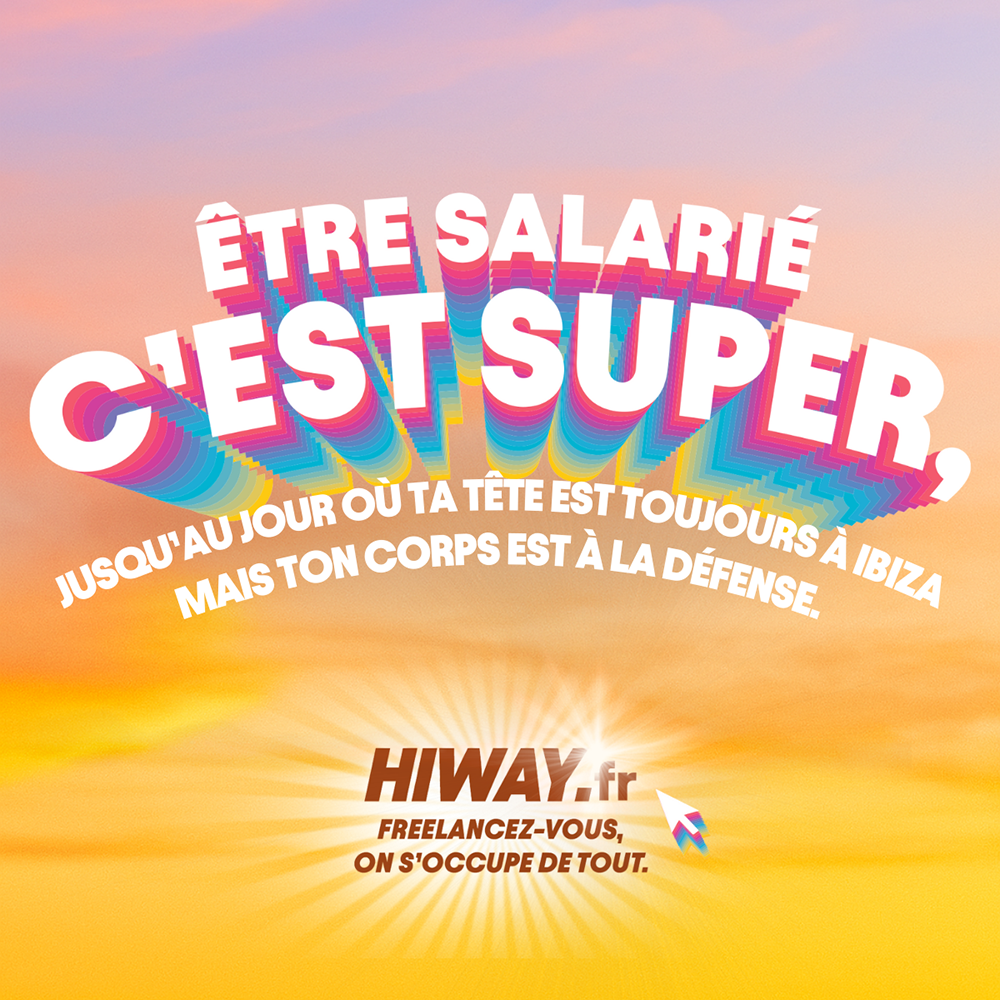
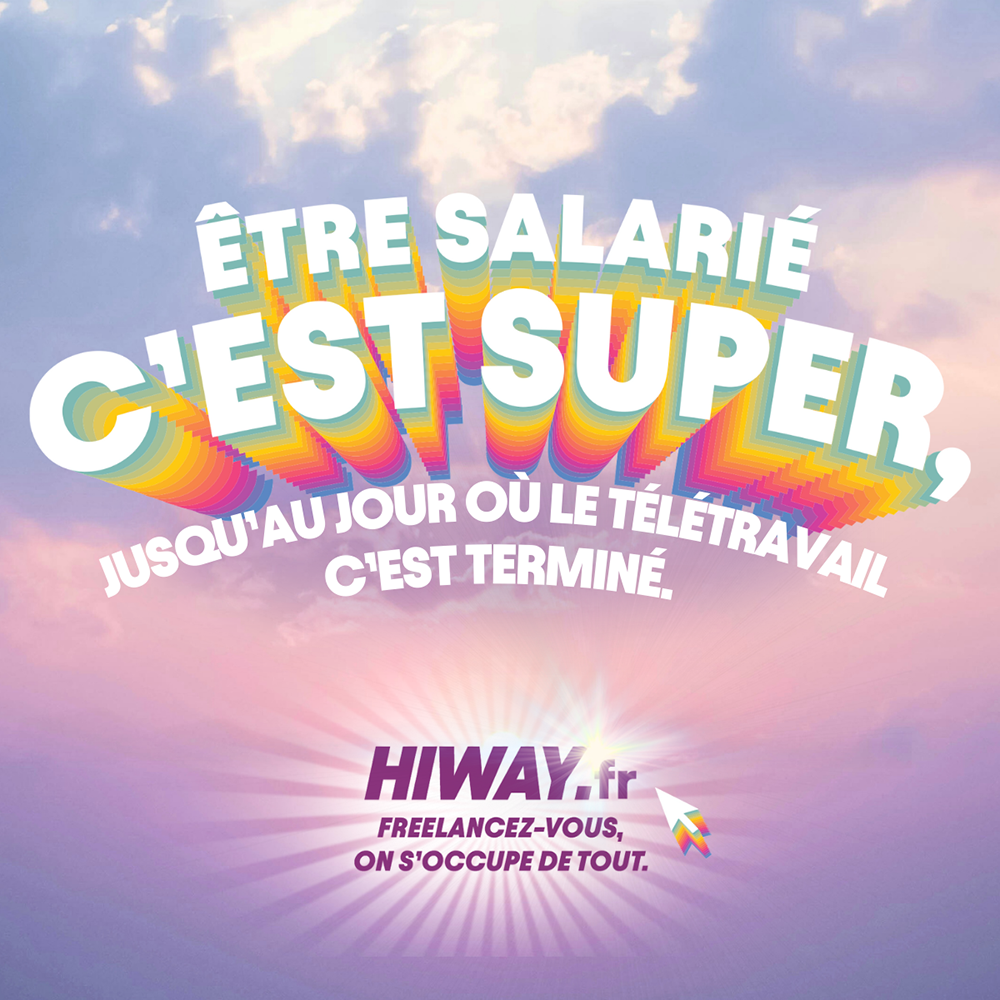
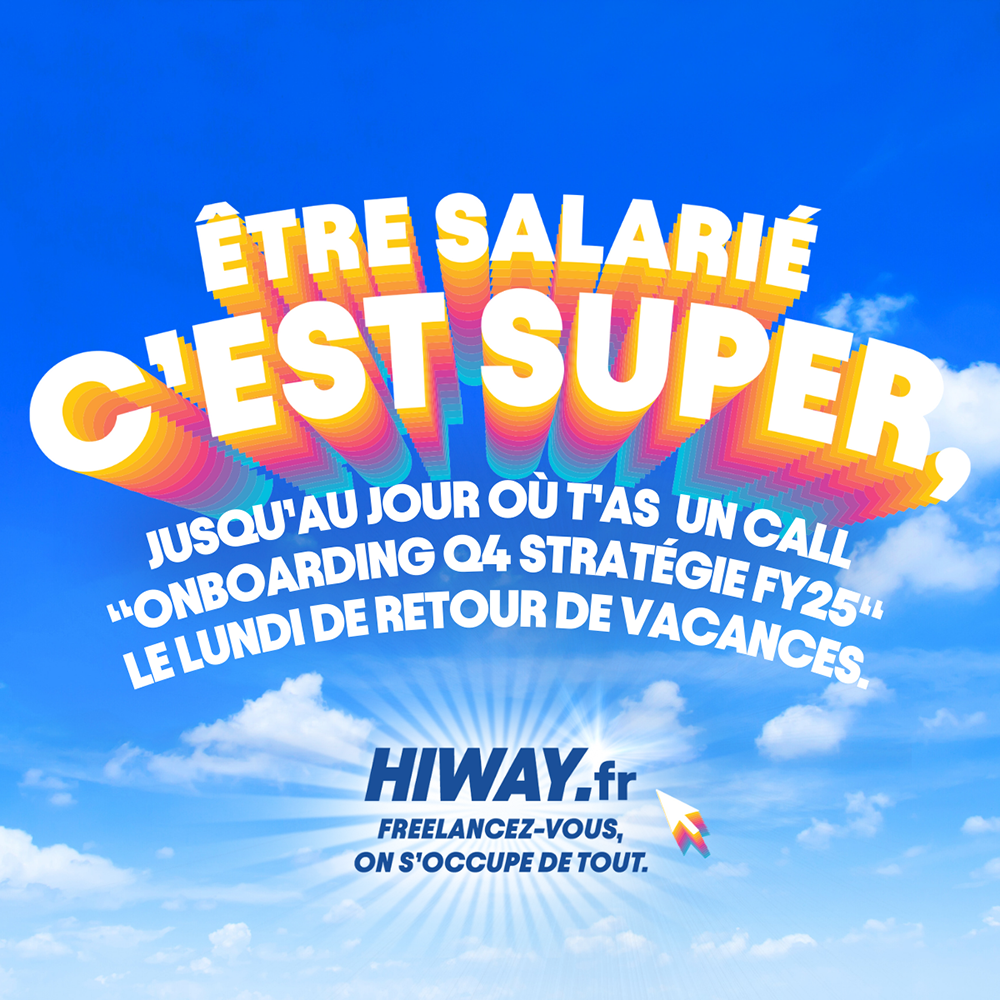
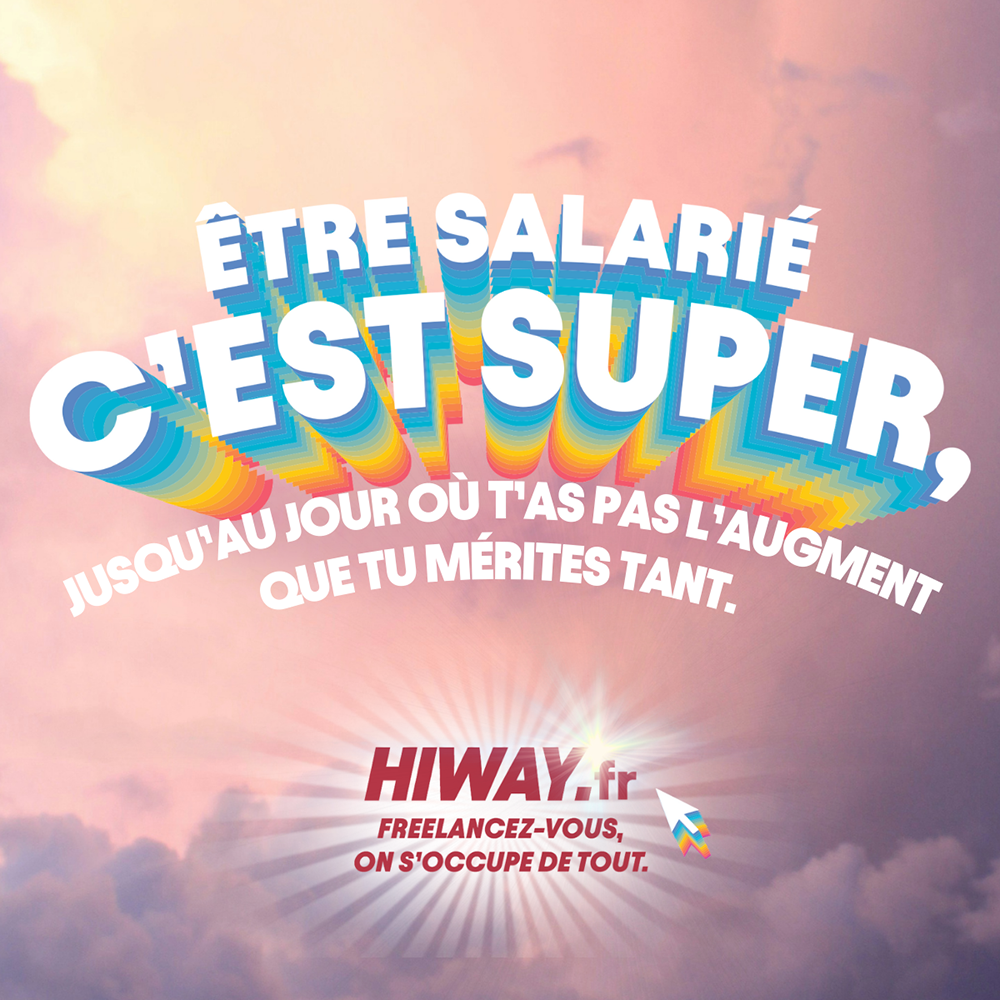
Today, what I value most is freedom. That’s what led to the campaign. Being an employee is great… Until the day your holiday gets refused. Until the day you don’t get the raise you were promised. Until the day you realise you’re paid 20% less than your male colleagues. Until the day remote work is suddenly over… In short, all those moments when you realise you’re not that free after all.
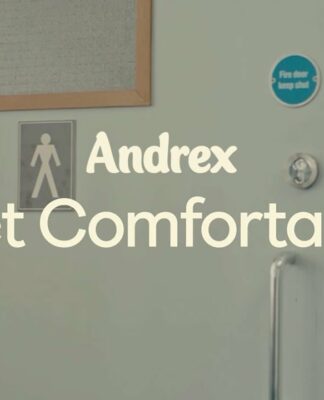
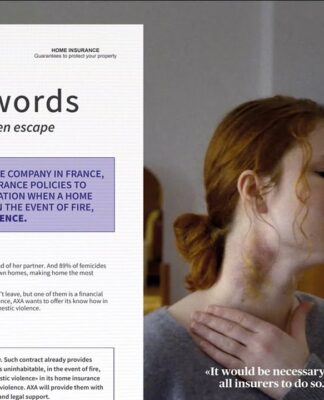
We developed a series of posters and short films, “CDI de fourmis” in French or “Grumble bees” in the English version, featuring slightly jaded employees stuck in not-so-rewarding jobs, dreaming of going freelance. We produced everything with Bolt, with sound by 750MPH, both being based in London, at a fraction of what this kind of production would have cost in the past, and in record time.
To be honest, working like this is incredibly refreshing. It gives Hiway a real brand presence, tapping into something very real, because there are a lot of frustrated employees out there. It’s a super rich platform, and the Hiway team, along with Romain, saw that immediately. They’ve got real marketing instincts.”
 |
 |
 |
 |
For Alexandre Franchi, CEO and co-founder of Hiway, traditional employment is no longer the default career path: “An entire generation is redefining its relationship with work, seeking more autonomy, flexibility, and meaning. This isn’t a sudden break, it’s a slow but irreversible shift.”
Campaign Credits – Brand: Hiway, Alexandre Franchi and Jean Boucher. Creative Studio: Albert Albert, Amsterdam. Creatives: Thierry Albert and Souen Le Van. Director: Thierry Albert. Production and IA: Bold London, Rob Godbold. Sound: 750Mph, London.
The decline of legacy networks and the rise of independence
Matthieu: You lived through the golden age of several major networks, but today the industry is consolidating at breakneck speed. What’s your take on these mega-mergers?
Thierry: “I get the feeling that the big networks are really struggling to produce strong creative work these days. It’s become incredibly hard to make something meaningful within those structures, there’s too much politics, too many processes, and large, demanding clients. The conversation is dominated by business, data, and AI. For creatives, it’s getting complicated. You spend your time working on decks, the presentations never end, there are too many people involved, timelines are insane and you just end up exhausted. Burned out.
At the same time, we’re seeing extreme consolidation. In Amsterdam alone, the legendary agency 180 disappeared, absorbed by DDB, then by TBWA in just a few months. It almost feels like, in the end, only Omnicom and Publicis will remain. And when you talk to creatives still inside those systems, it’s not necessarily where they’re happiest.
Meanwhile, you’ve got incredibly talented people building small, independent gems, studios like Isle of Any, Flower Shop, or American Haiku, in New York alone. That’s where a lot of the real creative energy is right now.”
Matthieu: If creativity is being stifled within large networks, does the future, and perhaps the salvation of the industry, lie with smaller structures and independents?
Thierry: “Absolutely. The best creative talents are increasingly going independent, doing their own thing, and networks will tap into them when they need to. The future belongs to structures that put creativity back at the center.
Of course, we’ll still have independent networks like Wieden+Kennedy or Mother, who also rely on top freelance talent at times. And alongside them, we’re seeing an explosion of small, 100% creative studios and collectives.
That’s exactly why I left the big agencies. I wanted to focus on what I do best, writing and crafting surprising ideas, rather than spending my time navigating internal politics or working on endless decks that everyone ends up hating.”
Matthieu: Do you think the French advertising industry is ready for more freelancing?
Thierry: “Freelancing and independence are the future. Big agencies will likely keep strategy in-house and bring in creatives depending on the brief or tone they’re after. France is still a bit behind on that. In the US and the UK, many of the best creatives already are independent. Some of the top agencies work with world-class talent who aren’t employees but freelancers. They are free, better paid, more fulfilled, and incredibly sharp.
We recently helped Special UK on major pitches in France and the US, and honestly, we had a blast. We also love collaborating with agencies like Buzzman or Rosa in Paris, bringing fresh perspectives and awesome vibe, they’re among the best out there. Same with Nike, who we recently supported on a last-minute push.”
Matthieu: How would you define yourself today? And why choose to create Albert Albert rather than return to a large network?
Thierry: “I left the big networks because I found them too slow, too expensive, and weighed down by politics and processes. Today, I present myself as a Creative Director running his own studio/collective, Albert Albert, and as a Director at Iconoclast. The whole idea is to collaborate with right minded people. I bring strong experience, a global network of top freelance creatives, and the ability to either take on a brief solo or assemble a tailor-made team of killers.
We can jump into agency pitches, partner with production companies that need ideas but lack internal creative firepower, or work directly with brands, like Paris 2024, when they’re looking for campaign ideas and execution. We’re experienced, flexible, fast, and efficient. It’s a win-win for everyone as long as the vibe is right and there’s a genuine love for strong creative ideas.”
Matthieu: When it comes to execution, do you notice a difference in mindset between French and Anglo-Saxon agencies when you step in as a Director?
Thierry: “A lot. In the UK, when you bring in a top Director like Fredrik Bond, they can completely reshape the script, and the agency is open to it. I remember a Heineken Champions League film set on a cargo ship full of containers. Fredrik wanted to turn the ship’s propeller into a giant satellite dish, something that wasn’t in the script at all. We were hesitant, we didn’t quite get it… But he pushed hard, flew to the office and head-butted us all, we trusted him, and thank God we did, the result was brilliant.
“Real collaboration makes the work better.”
In France, creatives tend to be much more protective of their scripts. Directors are often brought in at the very end, once everything has already been approved by the client. It’s a shame, because real collaboration usually makes the work better. A Director brings an outside perspective, often exactly what the idea needs at that moment to make it even better than it is.”
Matthieu: You’re also known for having a sharp eye on trends. How do you find your insights—and what’s your take on artificial intelligence?
Thierry: “I’m quite old school when it comes to finding insights. I read a lot, Le Monde, The New York Times, The Guardian and I rely on chance, chaos, and real life to spot meaningful insights that can spark great ideas. Over time, you develop a kind of radar for them.
As for AI, I think it’s incredibly liberating. Today, with just a few prompts, you can bring an idea to life. When I was a teenager in the ’90s, making a film felt completely out of reach. I had this idea for a short film about a guy botching his own suicide at a gas station but I never made it because you had to go through traditional production companies guarding the gates. It was impossible.
“I think AI is incredibly liberating.”
Now, if you have an idea, you can make it happen. You can create something from your bedroom, or build a presentation strong enough to get the right people on board. It’s an amazing time.
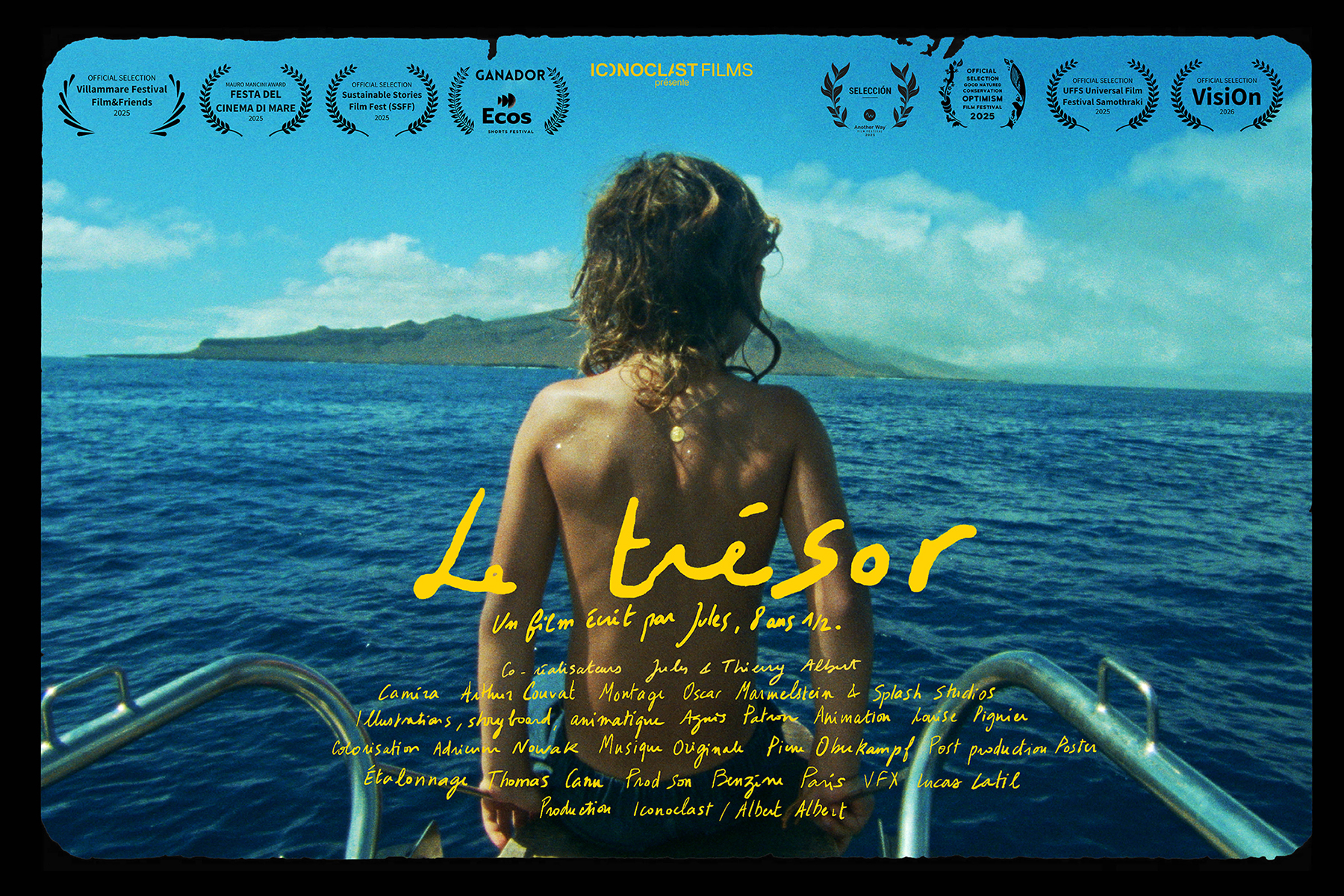
My 12-year-old son made his first short film, ‘Le Trésor’, exactly like that. Three years after scribbling the idea on a piece of paper, we brought it to life together, and along the way collaborated with incredible talent, including César-winning Director Agnès Patron. It ended up winning an award at a festival in Italy, with him on stage with his Director’s cap. A pretty powerful reminder of how far an idea can take you.
That’s always been my advice to younger creatives: make your ideas happen. With or without AI. No matter the gatekeepers, don’t wait for permission, just go for it. So… What are you going to make next?”
END.
A huge thank you to Thierry for his time, his trademark candour, and for sharing his unfiltered perspective on our dear advertising industry. His message is a sharp reminder: in a world of consolidation and creative fatigue, independence isn’t just an option, it’s where the energy is.
If you enjoyed this interview, there are more to discover on the blog over here: Our Interviews of Advertising Pros
If Thierry’s insights into the Amsterdam agency life have you curious about the broader local landscape, be sure to check out: Our Amsterdam & Netherlands Ad Agencies Map