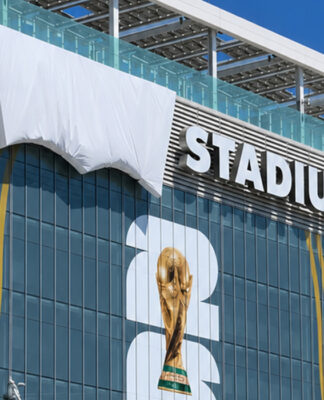


The 2026 World Cup will be unlike any other. Hosted across the United States, Canada, and Mexico, the tournament is already shaping up to be the most spectacular—and arguably the most commercialized—in soccer history.
Beyond its expanded 48-team format, the competition will introduce several innovations heavily inspired by American sports. Many critics see these changes as potentially disruptive to the flow of the game and demanding on players. For broadcasters and advertisers, however, they represent significant new revenue opportunities.
Hydration Break or Commercial Break?
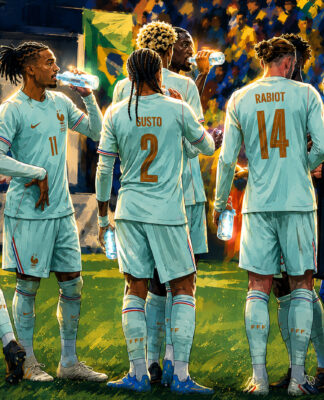
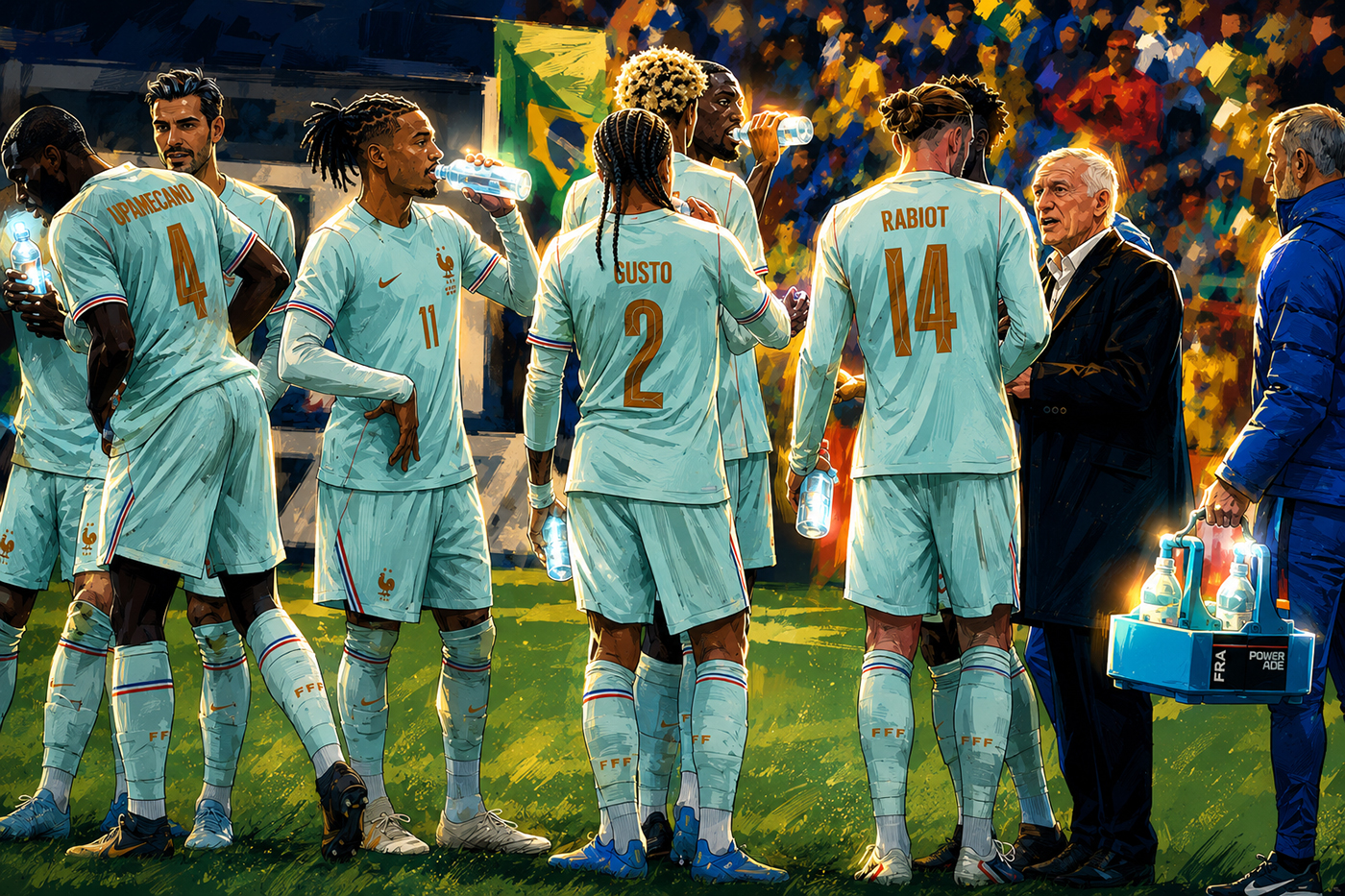
While cooling breaks will undoubtedly be useful in Mexico’s summer heat, they have historically been implemented only when weather conditions warranted them. In 2026, however, they will become a systematic feature of matches, regardless of temperature. Approximately every 22 minutes, play will be stopped for up to three minutes.
These breaks can certainly benefit players who need hydration and coaches looking to provide tactical instructions. During the United States–Senegal match on May 31, head coach Mauricio Pochettino even used a hydration break to show tactical video clips to his players on a laptop. Whether such practices will be permitted during the World Cup remains unclear.
10 hours and 24 minutes.
With 104 matches scheduled across the tournament and mandatory six-minute hydration breaks built into every game, fans watching every single game of the 2026 FIFA World Cup will spend a combined 10 hours and 24 minutes watching hydration breaks. That’s longer than the time it takes for a transatlantic flight, to watch the Avatar trilogy, or to listen to the Beatles’ discography.
The biggest winners of this new measure may ultimately be broadcasters such as beIN Sports, Fox Sports, or M6, which will gain additional inventory to monetize around live matches. Historically, soccer offered only one major commercial window: halftime. These new interruptions create additional moments that can be packaged and sold to advertisers.
For broadcasters, each break represents new commercial inventory: sponsored segments, branded graphics, partner billboards, contextual sponsorships, second-screen activations, and special studio integrations. At a time when sports rights continue to become more expensive for broadcaster, and increasingly lucrative for FIFA, this extension of “commercializable” airtime is hardly surprising. For example, in France, M6 reportedly spent nearly €120 million to secure World Cup broadcasting rights in France and will charge advertisers up to €120,00 for a 20-second commercial.
$332.8 million.
Fox Sports, which is paying a reported $485 million for its World Cup broadcast rights, stands to generate between $249.6 million and $332.8 million from hydration break advertising alone, potentially covering more than half its rights fee from a category of inventory that did not exist at the last World Cup. At a conservative average of $300,000 per 30-second spot that yields $249.6 million. At $400,000 per spot, Fox’s total climbed to $332.8 million.
These interruptions bring soccer one step closer to the American television model, with global brands firmly in sight. Compared with major U.S. sports leagues such as the NBA, NFL, NHL, and MLB, soccer’s traditional format, two uninterrupted 45-minute halves separated by a 15-minute halftime, has historically offered far fewer advertising opportunities.
“These so-called ‘cooling breaks’ were sold to us as a shield for the players’ well-being, a noble sword against the heat. But in reality? It’s nothing more than a gilded cage built for sponsors.”
“When I saw the players standing around during a hydration break while television timeouts dictated the game’s rhythm, I couldn’t help but wonder: Who is the World Cup really serving? The fans? The players? Or the advertisers?”
“A World Cup match should flow like a river. Instead, we’re building dams in the middle of it so commercials can get through. That’s dangerous for the spirit of the game. Football used to be the main event, but now it risks becoming the background music to an advertising spectacle. They tell us these breaks are for the players’ well-being, and of course players’ health matters. But when the game starts bending its knee to television timeouts, people are going to ask questions. The ball is supposed to be the star. Not a commercial break.”
“The World Cup is football’s cathedral. Yet sometimes it feels like we’ve turned it into a shopping mall where the cash register gets more respect than the match itself. If this is the future, then football isn’t being interrupted by the ads anymore. Football is becoming the interruption between the ads.”
Jurgen Klopp, Head of Global Soccer for Red Bull GmbH.
In the United States, sports are designed as entertainment products built around commercial breaks: quarters, timeouts, official stoppages, and halftime shows. Every interruption creates a monetizable moment. It is worth noting that M6 and beIN Sports have jointly committed not to air gambling advertisements, including sports betting promotions, during these additional breaks.
Even without traditional commercial pods, repeated cooling breaks will give brands countless opportunities to integrate into the viewing experience: LED board sponsorships, branded statistics, sponsored studio segments, exclusive social media content, and even real-time e-commerce activations. Advertisers are likely to compete aggressively to capitalize on these new touchpoints.
The advertising business increasingly appears to be dictating the game itself. During the tournament opener between Mexico and South Africa, referee Wilton Sampaio instructed South Africa to delay the kickoff, forcing players to wait for an additional 40 seconds while he coordinated with someone on the sideline because Fox had not yet returned from its commercial break. It is increasingly obvious that there is football between the commercial breaks, not commercials between moments of play.
During “hydration breaks,” the 4th referee is literally watching TV to know when the commercial break is over and signal when the match can restart. 😑 #FIFA #WorldCup #FIFAWorldCup #Advertising pic.twitter.com/IDr4u9nOcz
— Matthieu Lamoureux (@LLLLITL) June 14, 2026
A Super Bowl-Style Halftime Show for the Final
The clearest symbol of this “Americanization” will be the World Cup Final itself, the most-watched match of the tournament. The 2022 final attracted an estimated 1.12 billion viewers worldwide. Under the creative direction of Chris Martin (Coldplay), and with a rumored lineup designed to appeal to multiple generations and regions, including Madonna, Shakira, and BTS, the FIFA World Cup 2026 Final is expected to feature a large-scale halftime show directly inspired by the Super Bowl, traditionally the domain of American football (NFL).
The concept is simple: transform halftime into a standalone entertainment event capable of generating nearly as much attention and conversation as the match itself. The model is well established. Every year, Super Bowl halftime performances become media events in their own right, generating hundreds of millions of social media views, audience spikes during the live broadcast, and maximum exposure for sponsors associated with the show.
The 2026 World Cup appears poised to adopt the same strategy: turning halftime from a brief sporting intermission into a global entertainment spectacle designed for television, streaming platforms, social media, and advertising revenue. To illustrate the stakes, in France, a single 20-second commercial during M6’s broadcast of the July 19 World Cup Final could reportedly sell for as much as €425,000 if France qualifies for the match.
Other recent figures highlight the scale of the opportunity. During the 2026 UEFA Champions League Final broadcast by M6 on May 30, total advertising investments exceeded €13 million gross across the evening’s key viewing windows, including pregame coverage, the match itself, and the trophy presentation, with 90 advertisers participating.
This culturally and commercially driven interruption could also alter the sporting dynamics of the final. Halftime is expected to last at least 25 minutes, compared with the traditional 15. Coaches will have more time for tactical adjustments, but players may also cool down considerably before returning to the field. The result: a longer break, a bigger spectacle, and a much more monetizable one.
A Timeout for Players, a Prime-Time Opportunity for Advertisers
The FIFA World Cup remains one of the last global events capable of attracting massive live, linear audiences at a worldwide scale. For broadcasters and major brands alike, it represents a uniquely powerful media opportunity. But can the drive to monetize soccer justify rewriting the structure of the game itself? Are brands supporting soccer, or is soccer increasingly serving brands? FIFA appears to have made its choice.
Watch this year’s best World Cup ads (adidas, Budweiser, Levi’s, Nike…) in our dedicated post:
World Cup 2026: Watch the 26 Greatest Ads
Watch even more World Cup ads from around the world (American Airlines, Dove, Quaker, Verizon, Volkswagen…) in our comprehensive YouTube playlist:
ALL the 2026 World Cup Commercials