


For decades, advertising around major sporting events was based on a simple equation: buy as much space as possible and broadcast a 15 or 30 second spot to a captive audience. As the 2026 World Cup unfolds, this logic seems to be fading in favor of another format: the short advertising film.
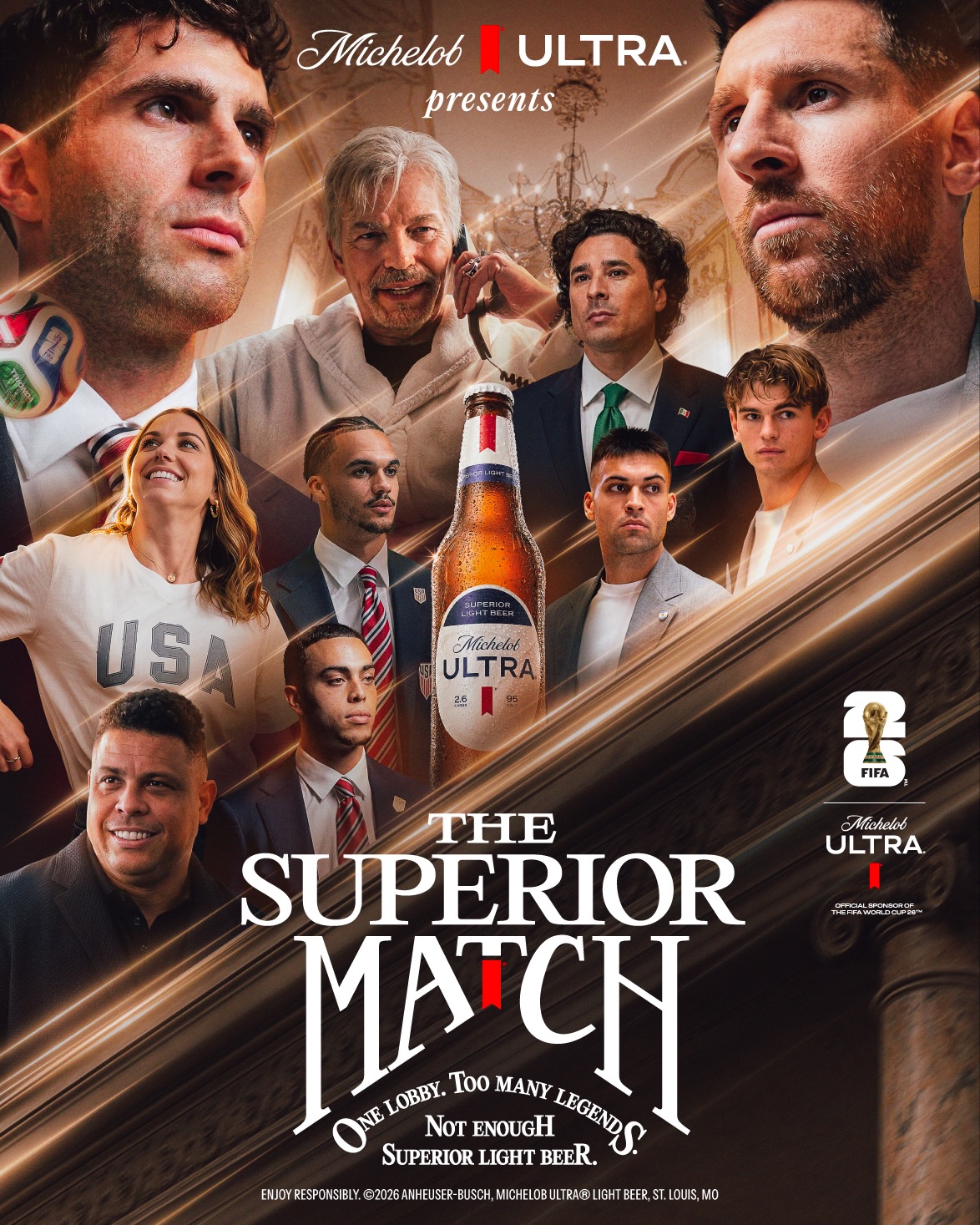
For this World Cup, major advertisers including adidas, Budweiser, Fox Sports, Lay’s, Michelob Ultra, Nike, Pepsi, and Powerade have all focused on multi-minute films (between 3 and 6 minutes each),often rivaling Hollywood productions in scale and quality.
This is the kind of content designed to be watched “voluntarily”, shared on social media (which are often mistakenly described as being obsessed with short-form content) and deployed across all of a brand’s communication channels, online and beyond. This shift reflects a profound change in media consumption and in the relationship between advertisers and their audiences
The 30-second TV spot is no longer the starting point
Produce less to distribute more? For a long time, television dictated its format and constraints to all other channels. Campaigns were built around a single flagship 30-second or one minute commercial, which was then adapted into 15- and 20-second versions. Brands told a simple, concise stories, repeated as widely as possible during the competition. This ultra-short format often limited the range of possibilities for extending the campaign’s reach to other platforms.
Produce more to distribute more. After reviewing more than 120 advertisements from major brands produced specifically for the World Cup (the 26 best are in this article), one observes that advertisers have completely reversed this trend. They have produced a short film, conceived primarily for YouTube and CTV, before adapting it for TikTok and Instagram… And for media coverage as well: these short films serve, in effect, to “create an event” and also to obtain “earned media” in sports and mainstream media.
The other major advantage of these formats lies in their versatility. A film lasting several minutes can be broken down into a multitude of 15, 30 or 60 second TV spots, excerpts for social media, clips shared by the celebrities involved, digital display formats, in-store video displays, localized versions for different markets… Thus, each scene becomes a reusable asset.
Whereas traditional advertising was often designed for a single medium, the short film becomes a content platform capable of powering a campaign for several weeks. For marketing departments, the return on investment is therefore potentially much higher.
adidas and Nike are breaking records
The two standout examples from the 2026 World Cup are very clearly “Backyard Legends” and “RIP The Script”. Both lasting more than five minutes, they feature casts that look more like the cast list of a blockbuster or a football final than that of a traditional advertisement.
Which of the two will win the “World Cup of Advertising”? Opinion is divided across the marketing industry, particularly on LinkedIn. Some praise the adidas film for its screenplay, its originality, and its emotional impact, while others applaud the energy, the cast and the spectacle of Nike’s film.
Their styles are different, but the trend is the same: to bring together stars from all backgrounds to transcend football itself, positioning it as a broader cultural phenomenon (music, cinema, pop culture, content creators…) rather than a sporting one, and thus generate enough interest for internet users to choose to watch the content themselves, rather than viewing it as an advertising interruption.
A trend that reflects the media landscape
This evolution also reflects a simple reality: audiences are becoming increasingly fragmented. Even the World Cup, one of the last events capable of bringing together hundreds of millions of viewers simultaneously, is now experienced across multiple screens. While the match is still primarily watched live on television, reactions are experienced on social media, conversations take place on WhatsApp, while the best moments, analyses, interviews and reports can be found on YouTube or through on-demand viewing. In this context, a long advertising film has a considerable advantage: it can thrive across platforms.
Because consumers are spending more and more time online, in a world where advertisements are more easily ignored, brands now have to earn the public’s attention. Short films address this challenge precisely. They borrow the codes of entertainment: plot, humor, emotion, high-profile cast, carefully curated soundtrack, ambitious direction… The goal is for viewers to feel they are watching cultural content related to their interests rather than an advertisement.
In short, this 2026 World Cup confirms that advertising no longer seeks merely to interrupt content, it seeks to become content itself. In a world where attention is the scarcest resource, brands are increasingly operating like production studios, capable of creating their own programs rather than simply buying advertising space around other people’s content
Watch this year’s best World Cup ads (adidas, Budweiser, Levi’s, Nike…) in our dedicated post:
World Cup 2026: Watch the 26 Greatest Ads
Watch even more World Cup ads from around the world (American Airlines, Dove, Quaker, Verizon, Volkswagen…) in our comprehensive YouTube playlist:
ALL the 2026 World Cup Commercials