

Wherever you are in the world during the 2026 FIFA World Cup, it’s almost impossible to turn on the TV or scroll through social media without seeing David Beckham. He’s everywhere.
At 51, the former England captain has become the most in-demand celebrity of the tournament. Even more than Lionel Messi, Kylian Mbappé, or Erling Haaland, who are all still competing and currently tied atop the Golden Boot race with seven goals apiece. Here’s why Beckham has become the biggest marketing winner of the World Cup.
Eleven Brands, Eleven Exclusive Deals
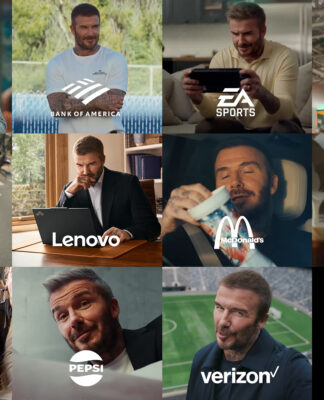
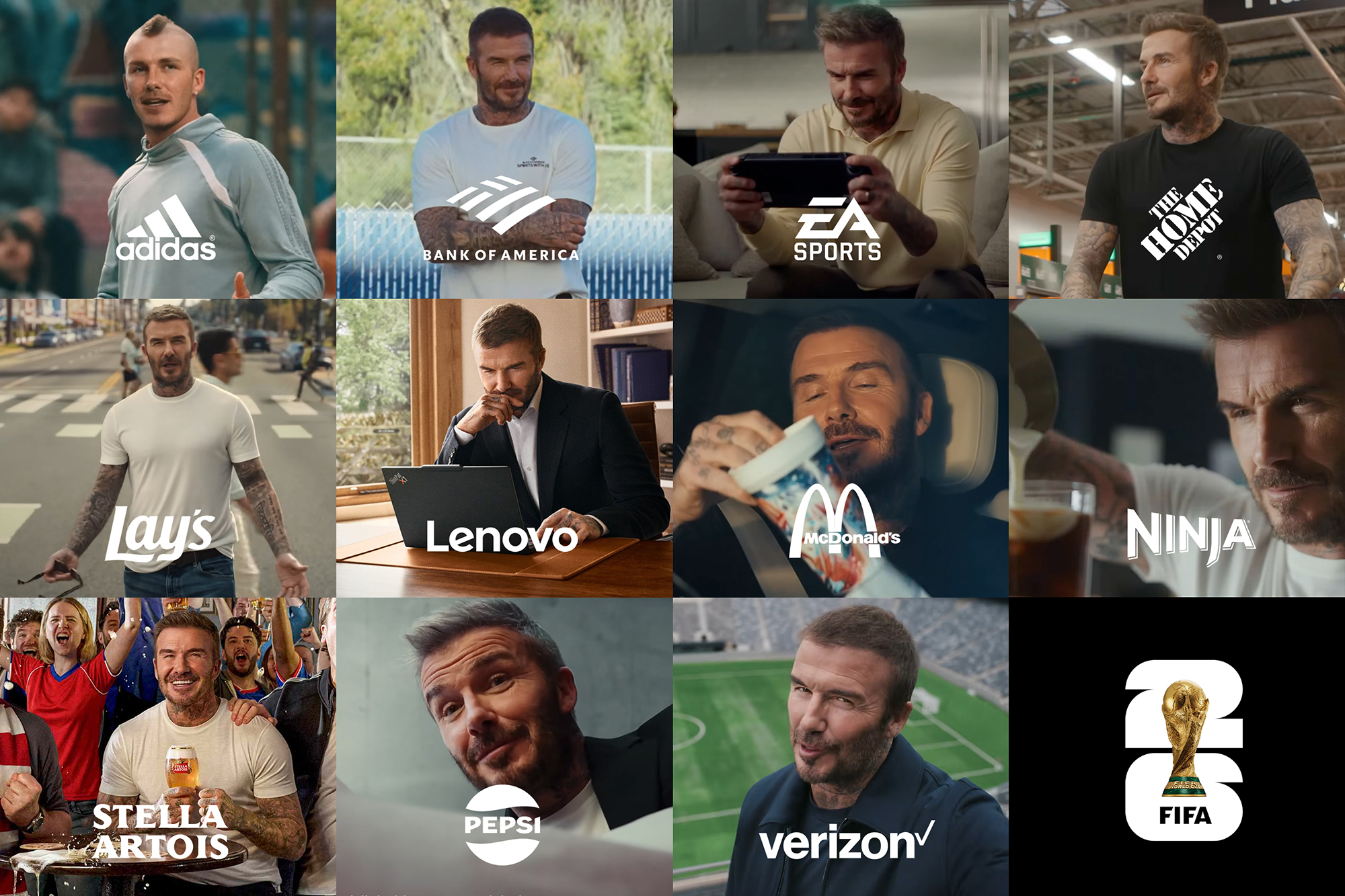
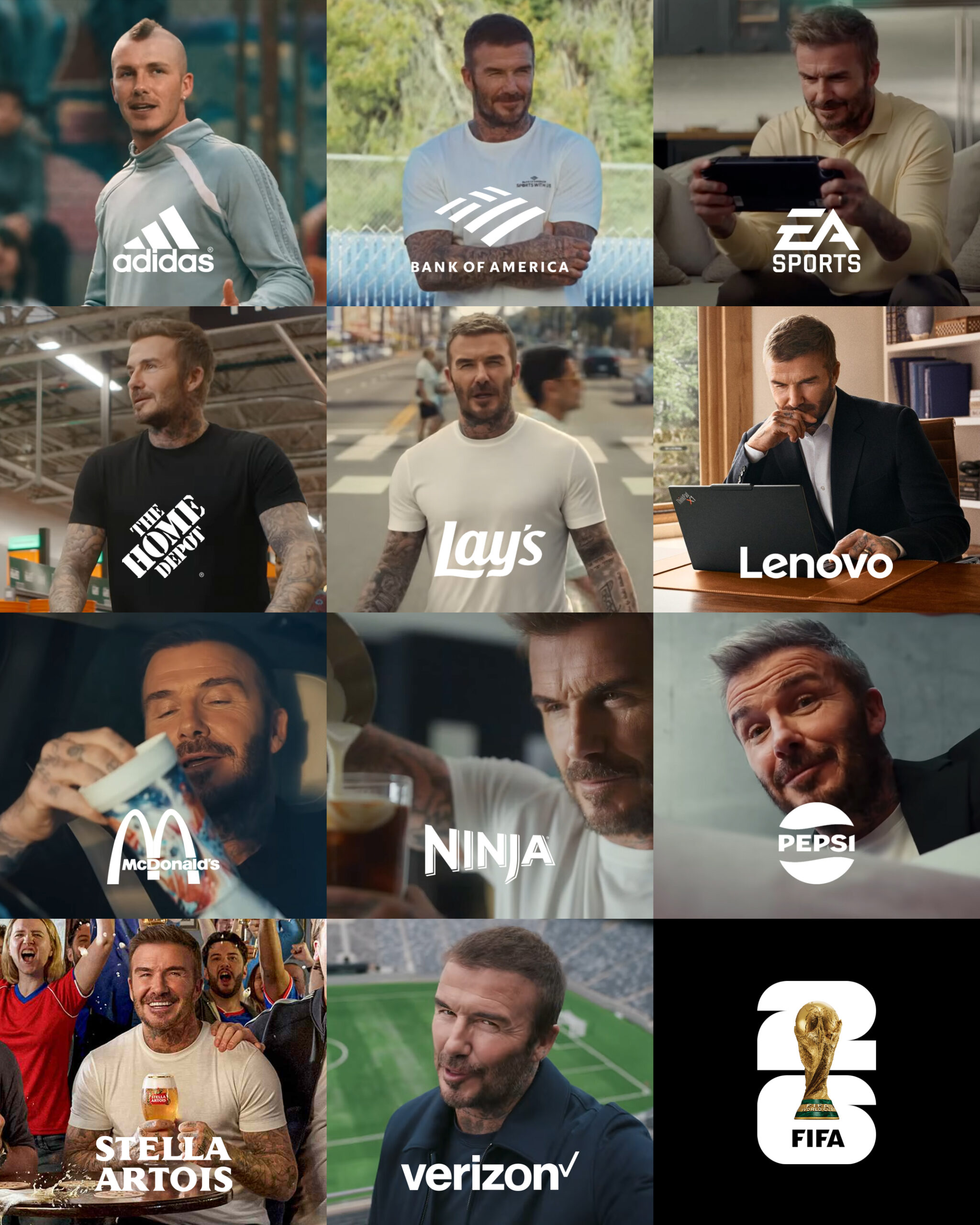
The list is staggering: adidas, Bank of America, EA Sports, Home Depot, Lay’s, Lenovo, McDonald’s, Ninja Kitchen, Pepsi, Stella Artois, and Verizon have all tapped Beckham to front their World Cup campaigns. The brands all operate in different industries, and that’s no coincidence. Each advertiser negotiated category exclusivity, meaning Beckham can’t endorse another potato chip brand besides Lay’s, another beer besides Stella Artois, or another bank besides Bank of America during the tournament.
Category exclusivity is standard practice in sports marketing. What’s unprecedented is seeing a single personality lock down eleven different product categories, all running major campaigns over the same five-week event. It’s a level of commercial saturation rarely, if ever, seen in football.
And even that list doesn’t tell the whole story. In recent weeks, Beckham has also appeared in Boss’s Wimbledon campaign and partnered with Paramount+ around the UEFA Champions League Final. His schedule looks far more like that of a Hollywood A-lister than a retired footballer.
Naturally, it pays extremely well. Beyond his lifetime adidas deal, signed in 2003 and widely estimated to be worth more than $160 million, each major global campaign is believed to earn Beckham between $2 million and $5 million. Altogether, his World Cup-related partnerships alone could generate somewhere between $20 million and $40 million, depending on the scope of each agreement, his level of involvement, geographic reach, and media commitments.
Why Every Brand Wants The Spice Boy?
The reasons are obvious once you look closely. First, Beckham enjoys a level of global recognition that spans generations. He resonates with fans who watched him bend crosses in for Manchester United and Real Madrid just as much as teenagers who never actually saw him play. Very few retired athletes still command that kind of worldwide awareness.
His profile is even stronger in the United States, where most of this ‘World Cup of Advertising’ is taking place. Following his years with the LA Galaxy and, more importantly, his role as Co-Owner of Inter Miami, Beckham has become one of the defining faces of soccer in America. Lionel Messi’s arrival at the club in 2023 only amplified that visibility.
His place in American popular culture reached another milestone just weeks ago, when he received a star on the Hollywood Walk of Fame, becoming the first and only soccer player ever to earn one. Few footballers have successfully crossed over from sports icon to entertainment celebrity.
Brands also love the image he projects. Beckham is widely perceived as trustworthy, polished, and controversy-free. His enduring popularity, combined with his fashion credentials and timeless appeal, allows him to connect with both male and female audiences, making him an ideal ambassador for mass-market brands like Lenovo or Pepsi.
While one of the biggest advertising trends of this World Cup is the emergence of new personalities, from national team coaches to television analysts (see our dedicated article on why they have become advertising’s newest stars), football legends, whether active or retired, remain among the safest investments for global brands.
Perhaps Beckham’s biggest advantage, however, is that he’s easier to work with than today’s biggest players. He doesn’t have a match schedule, training sessions, recovery protocols, or club obligations. He won’t suffer an injury the day before a commercial shoot. He’s available year-round and has spent nearly three decades mastering the art of advertising. Marketing teams know exactly what they’re getting: a seasoned professional who’s comfortable on set, reliable, media-savvy, and deeply familiar with the expectations of global brands.
In many ways, Beckham now resembles a Hollywood actor whose specialty happens to be soccer rather than a retired player occasionally licensing his image. That evolution is especially visible on Instagram, where sponsored content appears so frequently that his feed often feels more like an uninterrupted commercial break than the personal account of one of football’s greatest icons.
When Does Advertising Become Overexposure?
Beckham’s ubiquity inevitably raises an important question: at what point does an icon become little more than a walking billboard? With eleven major campaigns running simultaneously, the formula may be approaching its limits. Seeing the same face in commercials for a bank, a fast-food chain, a soft drink, a beer, a sportswear brand, a home improvement retailer, and a kitchen appliance company, all within the same 5-weeks tournament, risks creating fatigue among viewers. The more frequently audiences see the same face selling different products, the less impact each individual campaign may have. Rather than increasing effectiveness, repeated exposure can reduce attention and make each individual campaign less distinctive.
Another potential downside is brand coherence. Beckham’s image has long been associated with elite performance, healthy living and timeless style. Endorsing chips, fast food, soda and beer creates an obvious disconnect. Consumers know celebrities don’t have to use every product they promote, but the wider the gap between the ambassador’s lifestyle and the products they endorse, the harder it becomes to maintain credibility and influence.
There’s also the question of authenticity. When one celebrity endorses so many unrelated brands, consumers naturally begin to question how genuine those partnerships really are. “Authenticity” has become one of modern marketing’s most valuable currencies, yet it becomes increasingly difficult to sustain when endorsement deals multiply at this scale.
Researchers at the Ehrenberg-Bass Institute have long argued that advertising works by building and reinforcing memory structures so that a brand comes to mind at the moment of purchase. That task becomes much harder when the same celebrity is representing numerous companies at once.
Consumers may remember seeing David Beckham in an ad but struggle to remember which brand it was actually promoting. While celebrity endorsers remain incredibly effective marketing tools, overexposure can weaken that effectiveness. Advertising professionals even have a name for it: the “vampire effect.” When a celebrity becomes the main attraction, they draw attention away from the brand itself, reducing the very memory benefits advertisers are trying to create. A great spokesperson should elevate the brand, not overshadow it. It also raises a broader question for marketers: how many endorsement deals are too many?
To go further, read our other posts on 2026 World Cup marketing:
The 6 Key Trends and 26 Greatest Ads The Ad Business Behind Hydration Breaks And The Halftime Show Why Short Films Are Overtaking TV Commercials Coaches And Commentators Are The New Ad Stars