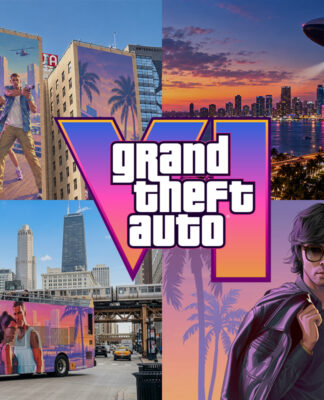


On paper, GTA VI doesn’t need advertising. Yet its marketing investment is massive.
As an agency-side marketer and a longtime fan of the franchise, I set out to break down the extraordinary campaign behind an unprecedented cultural event. In this post, I explore why Rockstar Games is investing so heavily in marketing. For the full activation timeline, see this companion piece.
The One Product That Doesn’t Need Advertising
GTA VI is, without a doubt, the most anticipated cultural product of the decade (of all time?). Every official announcement generates hundreds of articles. Every trailer breaks viewership records. Every screenshot is picked apart by millions of fans. No other brand in the world can claim this level of organic demand, or this much media coverage from the slightest sign of life.
What’s more, analysts agree the game is set to shatter every record in entertainment history by recouping its enormous development costs, estimated at around $1.5 billion, almost instantly. The game could sell roughly 25 million copies at launch. At $79.99 for the Standard Edition ($99.99 for the Ultimate Edition), that would mean $2 billion in gross revenue in just 24 hours, exceeding the initial investment before marketing costs.
In such an extraordinary context, advertising seems optional. And yet Rockstar Games is promoting the latest Grand Theft Auto with a media plan estimated at around $500 million: giant out-of-home displays, PR and influencers, collaborations with artists and athletes, merchandise, limited editions…
So why on earth pay for attention you’re already getting for free? When awareness and sales are no longer the problem, what is paid media still for? That’s exactly what makes this campaign so fascinating for marketers. My take: GTA VI’s marketing isn’t just about supporting a brand or selling a game. It’s about turning a commercial release into a memorable cultural moment.
“I’ve been asked by investors whether we need to spend marketing dollars given the scale of the intellectual property, and the answer is, of course, we need to market it,” Take-Two CEO Strauss Zelnick (Take-Two is Rockstar Games’ parent company) explained in May 2026, promising:
“A very significant, broad-based marketing campaign that reflects where audiences and attention are today.”
In September, he pointed to the Barbie movie, another globally famous IP, as an example: “They did a phenomenal marketing campaign. It was really everywhere, and, by the way, it worked. Even though the IP is very well known.”
Three Objectives, One Strategy: Cultural Infiltration
The media mix may be fairly classic, but the scale and complementarity of the activations are not. Rockstar Games is rolling out a campaign of rare magnitude that takes the game’s universe off the screen and plants it in public spaces and in culture, in every form. Each lever targets a specific territory to reach and engage a different audience:
- Film and TV, with the Netflix premiere, 31 million views in four days;
- Sports, with the NBA’s Miami Heat, its jerseys, its rooftop and its “Vice City” court;
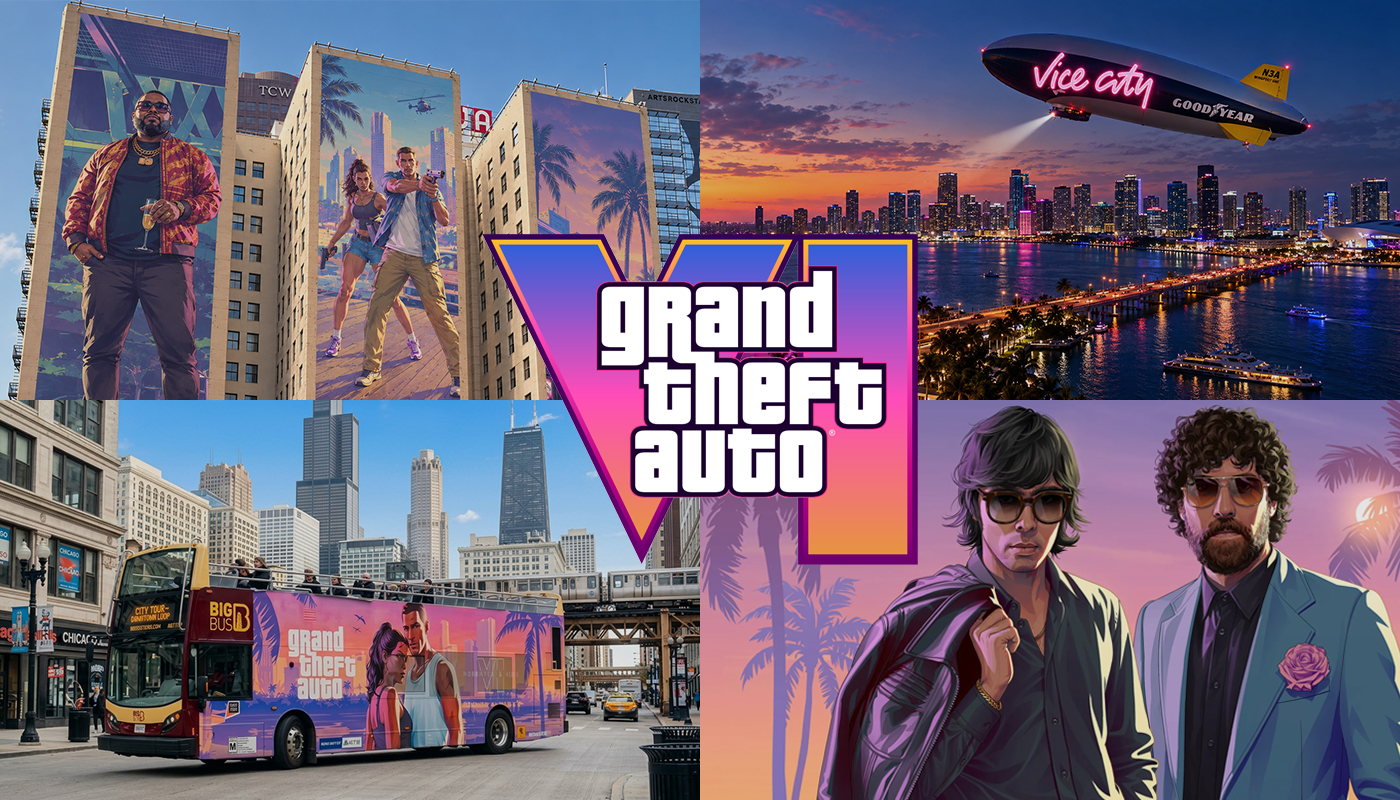
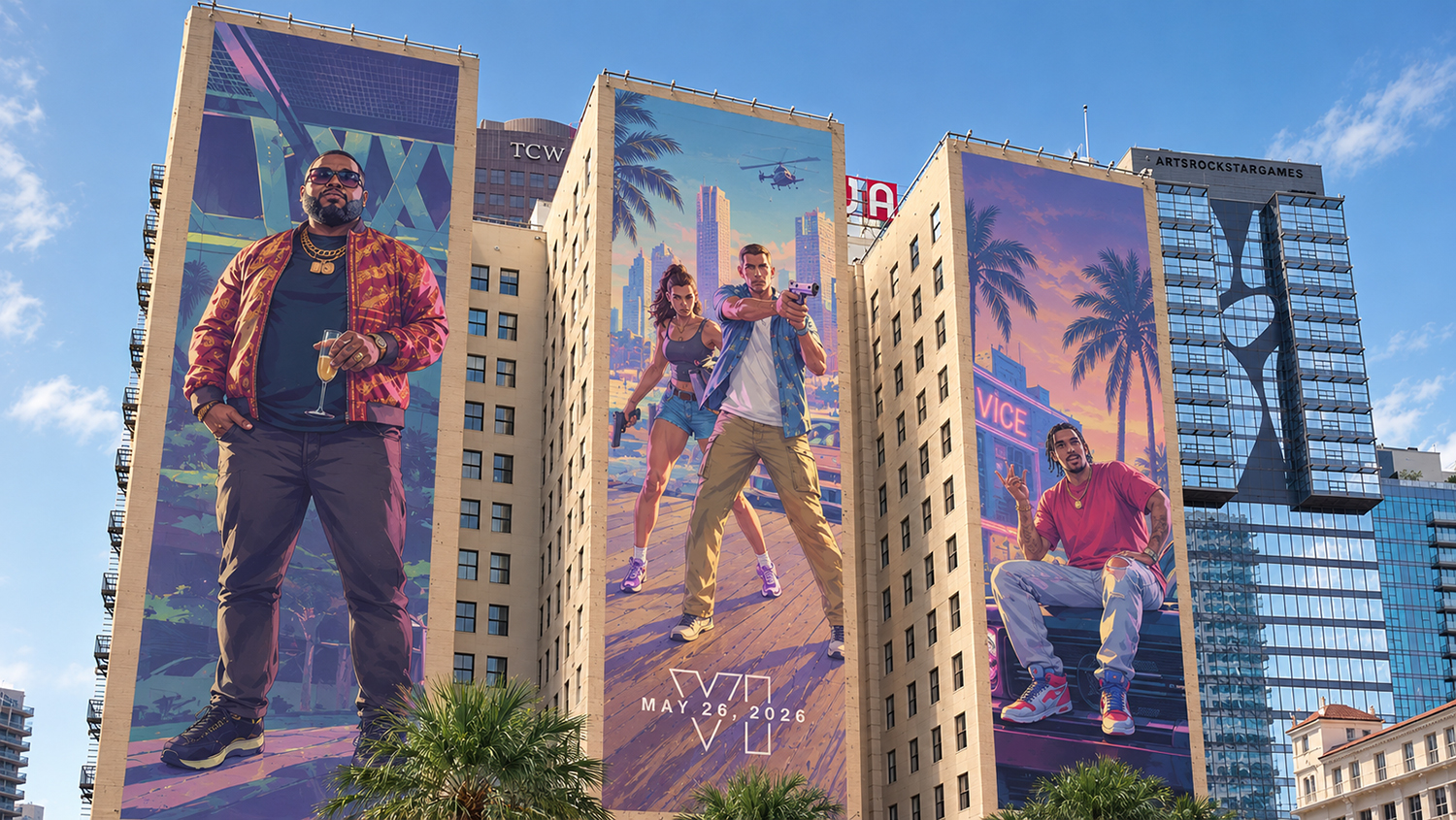
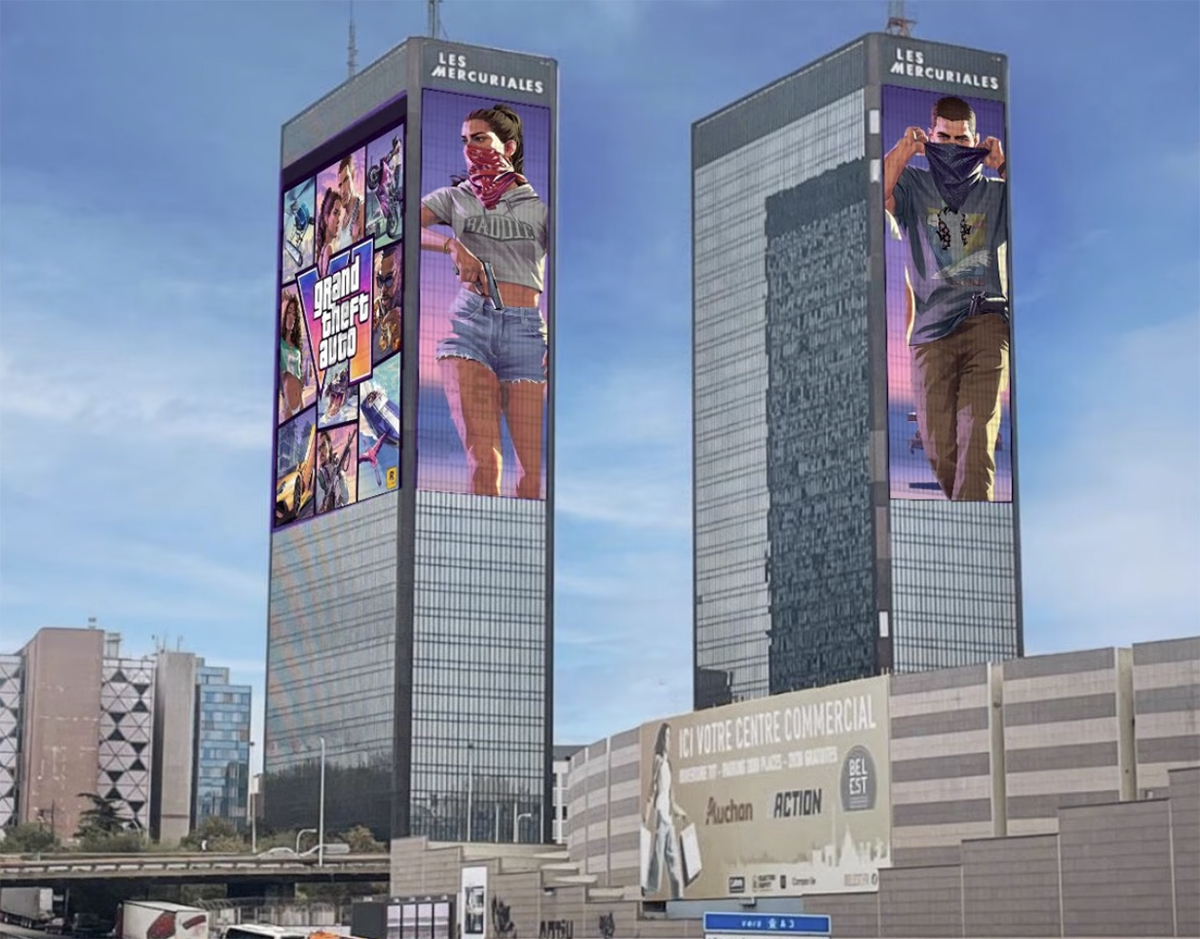
- Street art and urban culture, with hand-painted murals by Colossal Media in Brooklyn, and the giant wrap covering one of the Mercuriales towers along the Paris ring road;
- Cars, with supercars that until now only existed in the virtual world of Vice City;
- Fashion, through partnerships with Dazed, LOVE Magazine, Oakley and New Era;
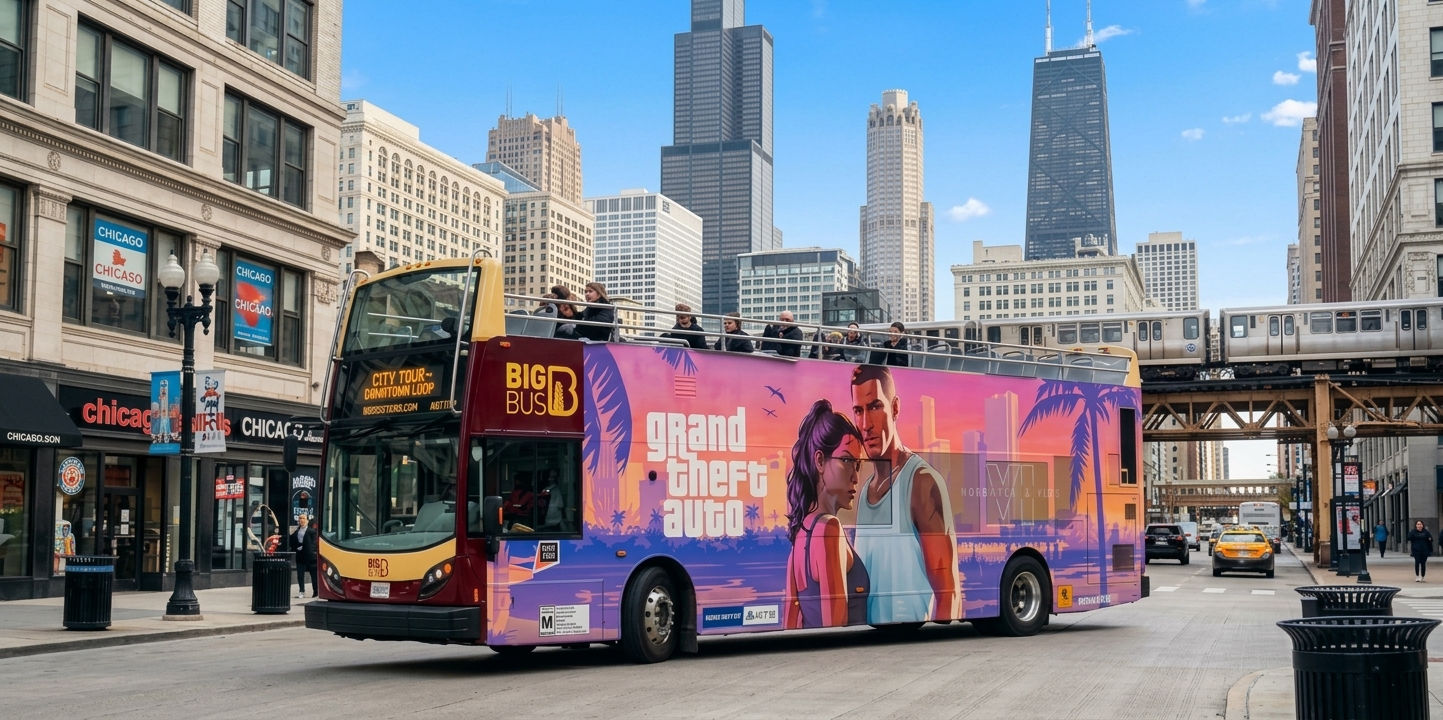
- Travel and tourism, with the sign visible from planes landing in Miami, the branded beach chairs on Miami Beach, and tour buses wrapped in GTA VI artwork;
- And of course music, one of the franchise’s biggest and longest-standing strengths, with a 34-track album created for the occasion with Atlantic Records and available on streaming platforms including Spotify, plus in-game radio stations hosted by artists whose styles are just as diverse and complementary.
Objective #1: Turning Anticipation Into Sales
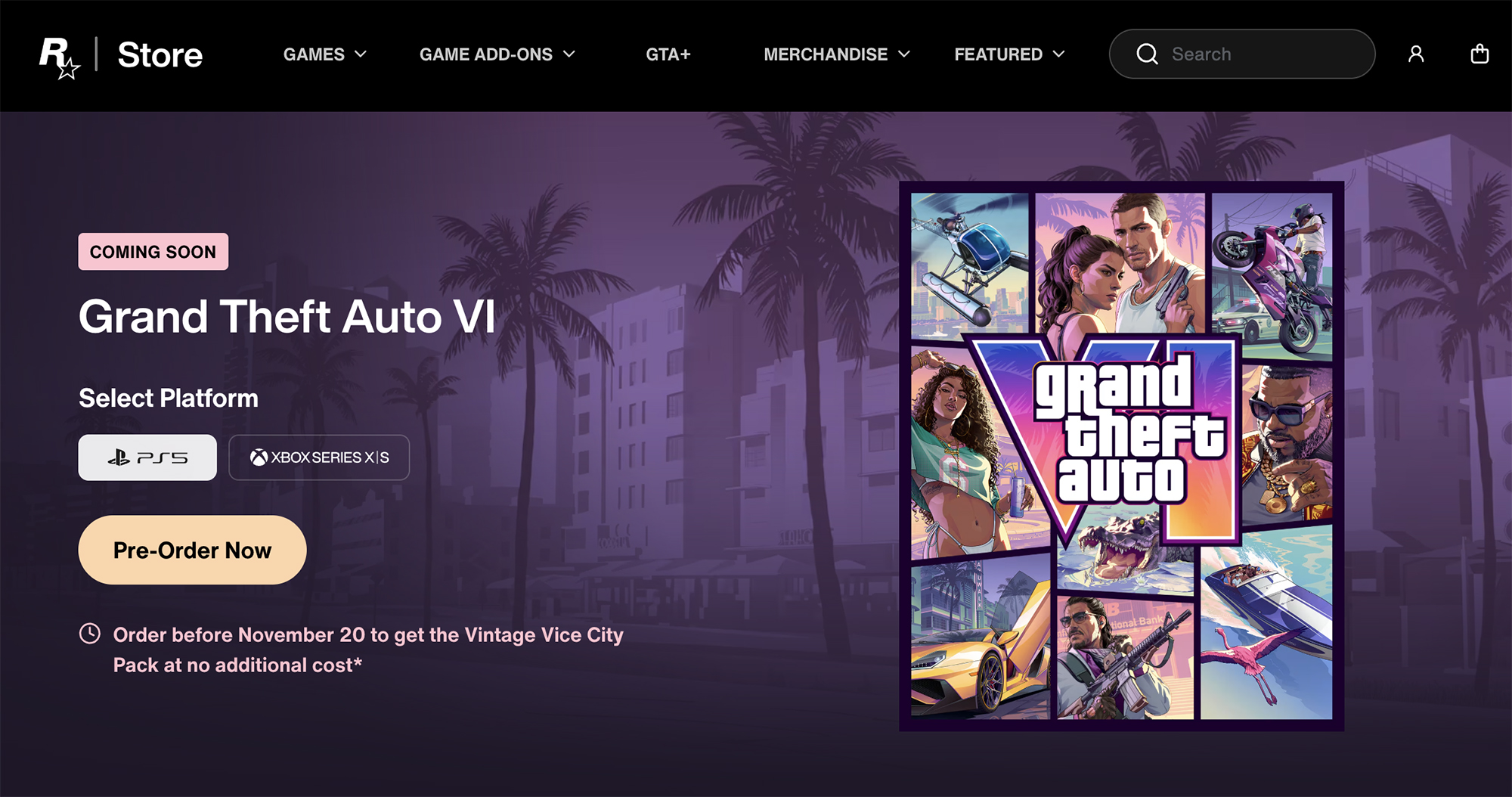
First and foremost, Rockstar Games wants this ad investment to turn anticipation into as many sales as possible, and stated interest into confirmed action, ideally toward the $99.99 Ultimate Edition. Early estimates are encouraging: according to Sensor Tower, nearly 9 out of 10 buyers are choosing the Ultimate Edition. As of mid-October 2026, 6 million pre-orders had reportedly been placed on PS5 and Xbox, representing nearly $600 million in revenue already secured more than a month before the official November 19 release.
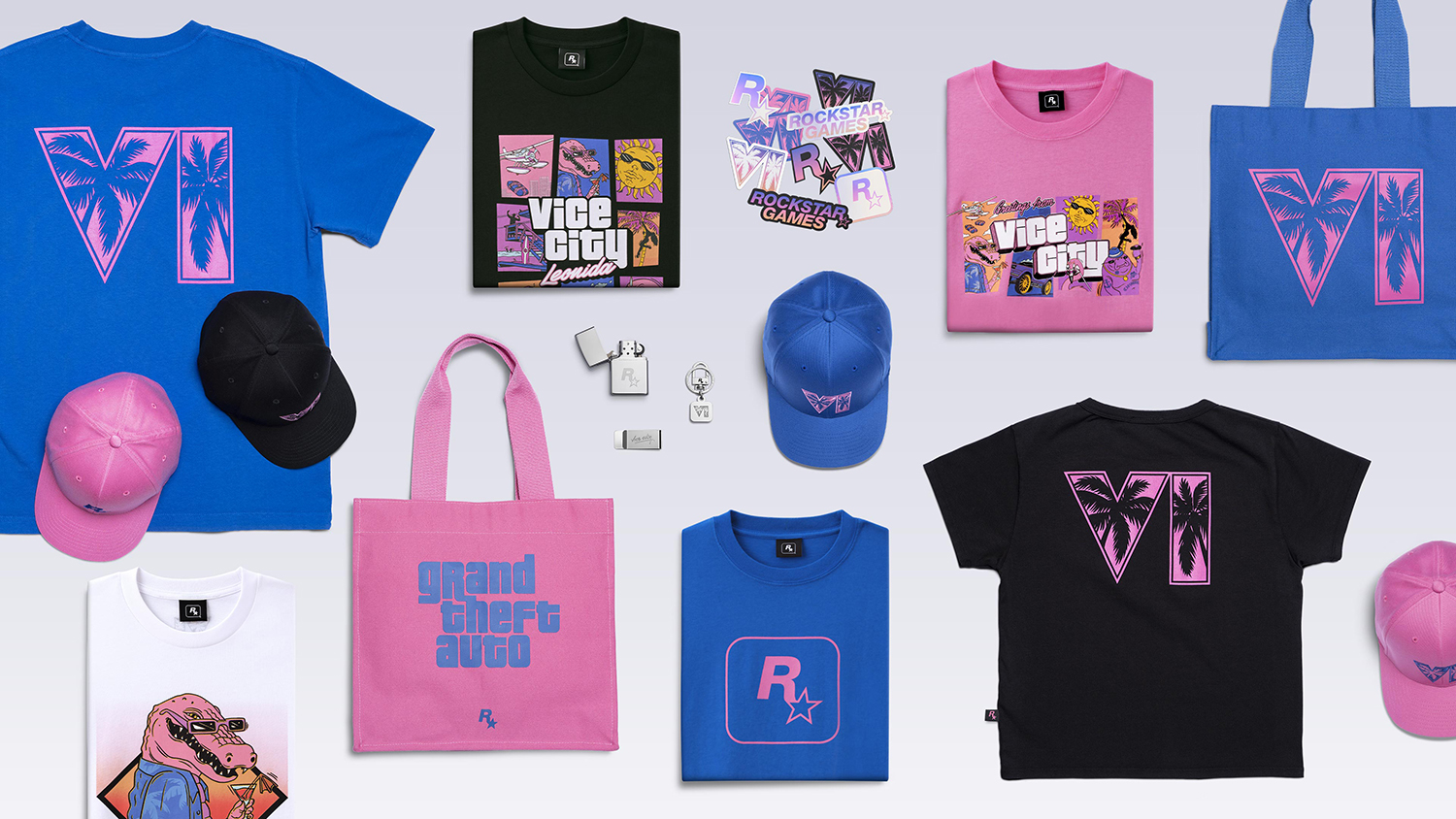
GTA is now much more than a game. Revenue streams are diversifying, with GTA Online expected in 2027, but also collector’s sets, exclusive vinyl, merchandise… Each commercial initiative drives up average order value. Here, paid media works as a conversion accelerator and a value driver, not an awareness play.
Objective #2: Reaching Beyond The Web
GTA VI’s earned media is huge, but it mostly stays within the digital world of the internets: gamers, digital-native media, YouTube, Twitch, Netflix, Spotify and Reddit. Rockstar Games’ media investment prioritizes everything outside of it, in the physical world.
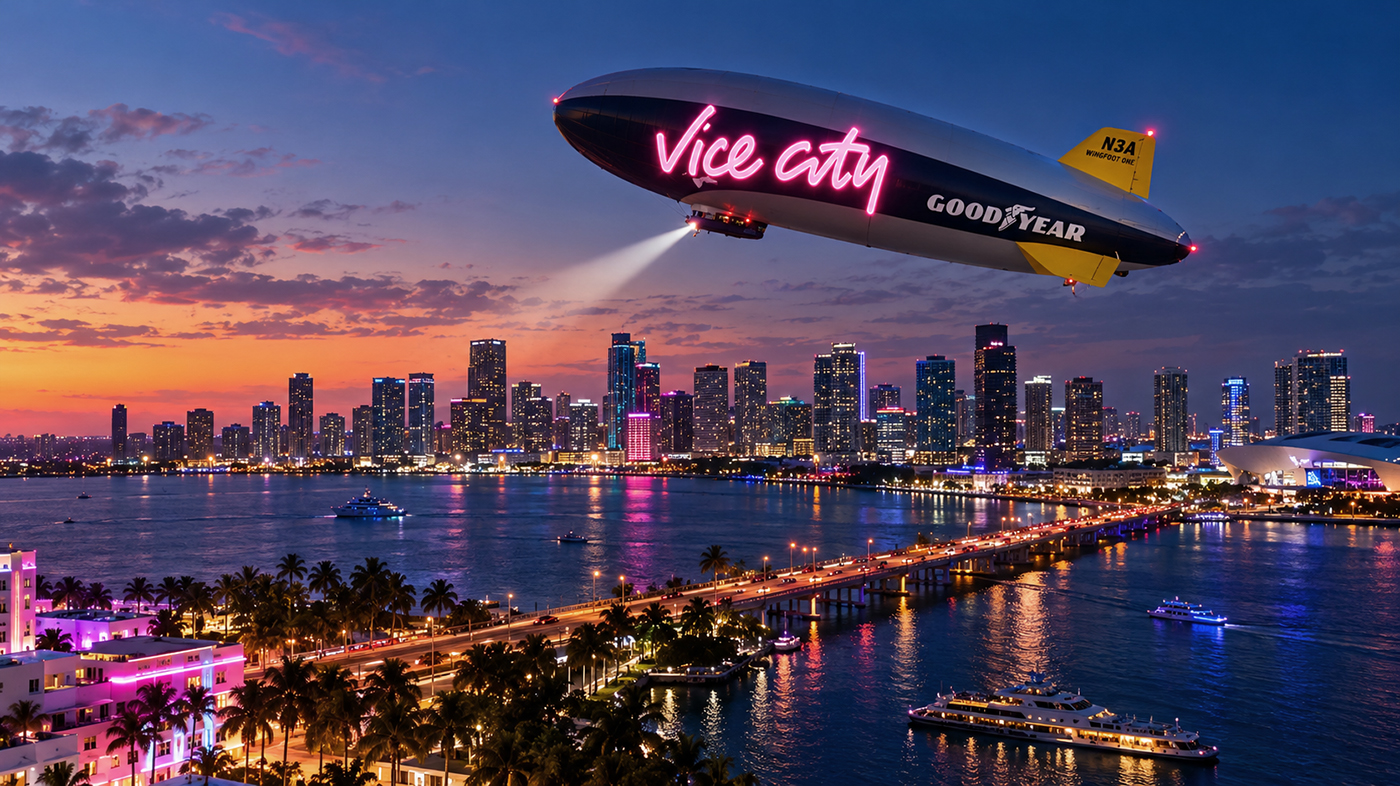
The Miami Heat and ESPN bring in sports fans who watch traditional TV. The partnership with Atlantic Records and a constellation of artists lets GTA VI reach fans of many music genres, on streaming platforms but also in record stores and concert venues. LOVE Magazine and Dazed take the game into territory it’s rarely associated with: fashion. The installations in Miami will reach tourists who come to soak up Florida culture. Each partner, each placement is carefully chosen for its “non-gamer” audience, not for its ability to reach a core audience that’s already won over.
Bright lights. Vice City.
A Night in Vice City tips off November 18. https://t.co/zZGGcrYyiS
— Miami HEAT (@MiamiHEAT) October 2, 2026
Objective #3: Making History
Finally, for a game fans have been waiting for since 2013, this is Rockstar Games’ chance to cement its legend. Part of the campaign has no measurable performance logic and plays by none of marketing’s usual rules. Through a wave of cultural collaborations, the campaign aims to establish Grand Theft Auto’s dominance and leave a lasting mark.
These massive ad investments may not be essential on paper, but they also aim to make this release a cultural moment bigger than the product itself. Rockstar Games wants to define its era, and wants everyone to know it, far beyond its loyal fan base that’s already on board.
Four Takeaways From GTA VI Marketing For Brands
1. Put the product before the marketing. Sales locked in before launch and an outsized wave of earned media with every announcement: that’s first and foremost the reward for an exceptional product. It’s a lesson for every brand that invests more in its marketing than in what it sells. As Take-Two CEO Strauss Zelnick puts it bluntly: “If the thing is no good, you can market the living shit out of it, and people will still not notice the marketing.”
2. Make every word count. Just two trailers in nearly three years, deliberate silences, public apologies for the delays: Rockstar rarely speaks, and that’s exactly what makes each announcement an event. It’s the opposite of brands that bet on being everywhere all the time and risk wearing out their audience.
3. Never neglect conversion. ROAS (Return On Ad Spend) shouldn’t be the only goal of every campaign, but GTA VI proves the point: even with unprecedented anticipation, the path to purchase has to be mapped out and optimized. It needs to give people reasons and ways to buy now rather than later, to choose a premium edition, or to add merchandise. Demand doesn’t turn into revenue on its own.
4. Show up where no one expects you. Too many brands preach to the choir, concentrating their media budgets on audiences that owned and earned media already reach very well. Rockstar Games does the opposite: its activations open up new communities and speak to them in their own language. For advertisers, the usual question, “Which platforms is my target on?”, should come with another one: “How do I reach the people who don’t know me yet?”
What The Numbers Will Never Capture
Ten years from now, we’ll probably have forgotten how many pre-orders GTA VI racked up, and GTA VII may already be out. But we’ll remember a November night when an NBA team played under the name of a city that doesn’t exist, and the album’s hits will likely still be played live. Most campaigns sell a product. This one is writing a chapter of pop culture.
To go further, read our other story: